Being an ardent fan of the original Devil May Cry games and the 2007 animated series, I was a tad sceptical when Netflix announced a rebooted anime adaptation way back in 2018. But, lo and behold, my inner cynic was proven wrong. Visionary producer Adi Shankar, the creative drive behind the outstanding Castlevania and Castlevania: Nocturne series, has delivered another faithful, if somewhat flawed, but fun adaptation of a beloved 2000s IP. Shankar seems to have an instinct for developing video game adaptations while remaining faithful to the source material and fans, something many Hollywood producers could take note from. Prioritising an original story not beholden to the previous continuity allowed for creative freedom, while Shankar leans into a vibes over logic mindset which suits this IP perfectly. So, talking about story, let’s give a brief rundown of the plot.
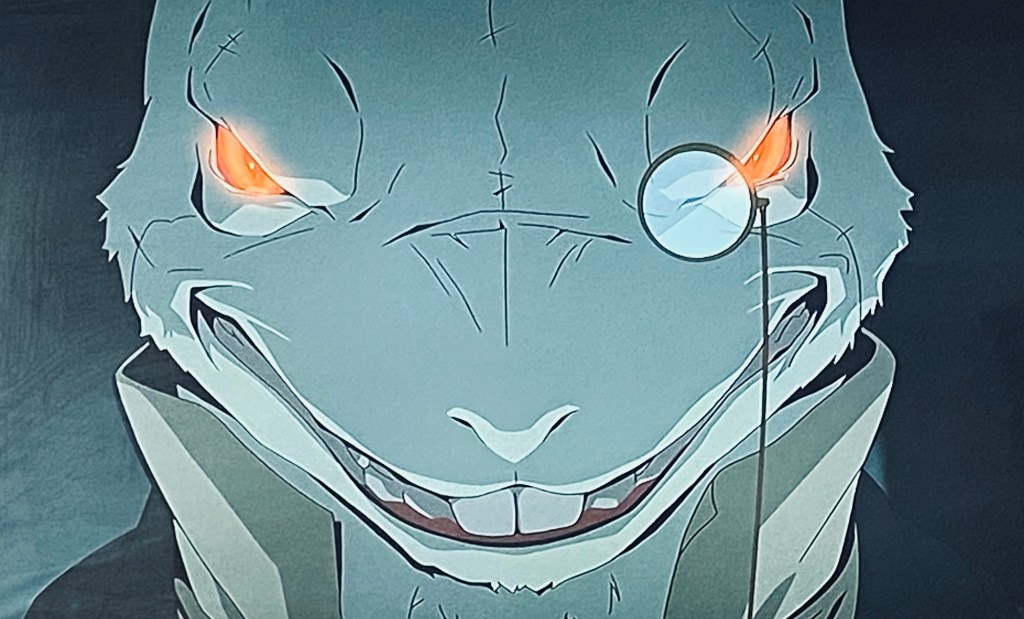
The series wastes no time and dives straight into introducing the audience to the cocky, quick-witted shenanigans of the demon hunter Dante as he finds himself caught up in a plot to open the gates of Hell and unleash Armageddon upon the unsuspecting mortal world. We are introduced to our villain in the very first scene, the White Rabbit, an Alice in Wonderland inspired six-foot talking demonic humanoid rabbit that gleefully unleashes violence at every possible moment while monologuing about the coming age of the demon. Sheer lunacy, but with style and flair as befits Devil May Cry. Somehow, Dante is essential to the Rabbits plans to open the gates of Hell beyond simply stealing his mother’s amulet (the series McGuffin). This allows for regular hyper violent action scenes that showcase the capabilities of each character, such as Lady, our secondary character who arguably gets more screen time and development than Dante but is no less entertaining and stays true to her roots from the games. It’s a simple and somewhat predictable plot, but that’s all Devil May Cry needs to be.
While there were a lot of positives in this series let’s take a look at some of the issues first. The first half of episodes is rather slow and bloated with characters that do nothing to serve the story and end up becoming dead weight. Literally. There was a lot of set up material for (hopefully) later seasons and the series took its time finding its feet. This throws the pacing off a bit despite the stylishly executed fight scenes. As mentioned before the story lacks nuance and focuses a bit too much on Lady (Mary as she’s known at the start) and this is somewhat detrimental to Dante’s early development. Perhaps an extra two episodes on the runtime may have been more beneficial for this. The CGI demons were just…no. Just no. It detracted from the visual splendour of the series and felt a bit lazy. The humour often felt a bit forced, especially early on as Dante felt like a poor man’s Deadpool at times, but it just wasn’t hitting the right notes. But enough of that, the positives far outweigh the negatives.

And speaking of notes, I loved all the needle drop moments and musical riffs by iconic 2000s bands like Evanescence, Rage Against the Machine, Limp Bizcit, Papa Roach (damn that motorbike scene was badass, you’ll know it when you see it) and a truly inspired Green Day song. That got a giggle out of me. The visuals were superb, not quite on the artistic level of both Castlevania instalments, but still superb work from Studio Mir as they continue to pad out their impressive portfolio. The fight scenes are fun, manic and kinetic but lack the polish and originality of Castlevania. I was pleasantly surprised by the nuance given to the White Rabbit and his backstory. It made him far more sympathetic and relatable despite his bonkers design. Episode 6 was a standout both in terms of animation and the exploration of White Rabbits backstory, utilising haunting renditions of Alice in Wonderland iconography that captured the essence of childlike experiences and the loss of childhood innocence while presenting a relevant social commentary on immigration rights through the lens of the demonic rabbit.
To sum it up, Netflix’s Devil May Cry series is most definitely a vibes over logic adaptation, but it is by no means superficial because of it. By remaining respectful of its roots and history, the opening season of Devil May Cry is full of style and flair, laying the foundations for future storylines while giving the audience (mostly) what they want: a bloody fun time. As Dante says, Jackpot!
3.5 / 5 ✨ from the Screen Scribe.
Devil May Cry is now available on Netflix.
(Images courtesy of and owned by Netflix)

 The Screen Scribe
Leave a comment