
A long running and problematic trend of not just modern cinema, but covering decades of Hollywood releases, is that of whitewashing. For those not familiar with the term, whitewashing is an industry practice where a white actor is cast in a non-white role, often to the chorus of star power or box office draw in order to cast a certain superstar actor for the project. The practice dates back decades but never really became a widespread issue until the 2000s as Asian and coloured actors became more prominent but instances of whitewashing continued. Now while I agree that whitewashing is a deplorable practice that is majorly dated and unacceptable, the same should be true of the opposite, colourblind casting, as I am about to discuss here. But for context, let’s begin with the former.
Common examples of whitewashing during the 2000s, particularly of Asian characters, would be Ra’s Al Ghul in Batman Begins (2005), The Last Airbender (2010) that saw all three main leads cast by white actors, and Dastan in Prince of Persia (2010). While there are many other examples, these are three of the most prominent for this decade. The practice continued in the 2010s and arguably grew worse, with Scarlet Johansson cast in the lead role in Ghost in the Shell (2017), all the main leads in Exodus: Gods and Kings (2014), Tilda Swinton cast as the Ancient One in Doctor Strange (2016) which not only whitewashed the character but also gender-swapped the role, and finally, the straw that broke the camels back as they say, Ed Skrein in Hellboy (2019). Again, I could provide a multitude of examples, but we will stick to these as the most egregious of the 2010s.



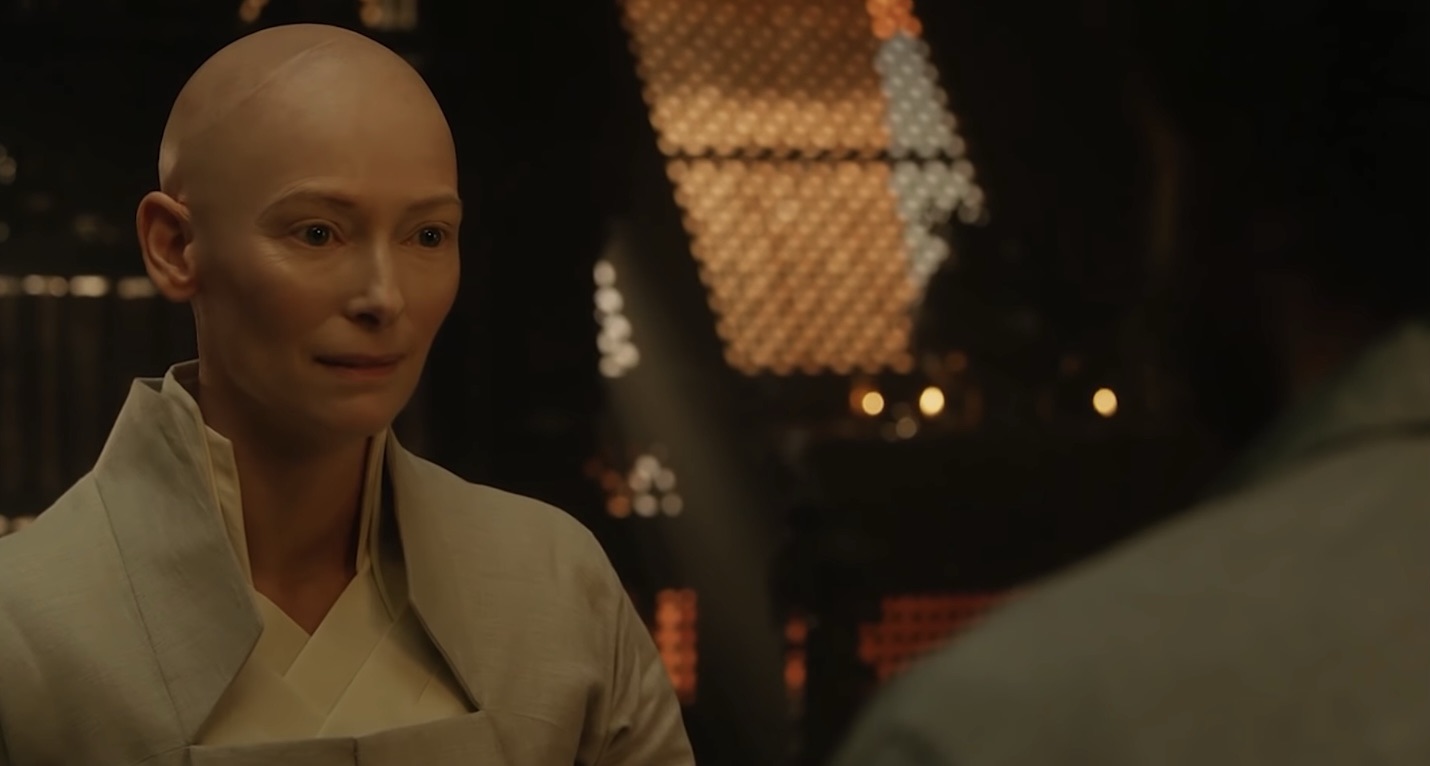
The vast majority of these cases saw white actors cast to portray characters of traditionally Asian or Middle-Eastern identity, with studios often abandoning said actors to deal with the issue of these castings in press conferences, often unprepared or fielding unsatisfactory responses as seen with Scarlet Johansson during the Ghost in the Shell press tour when she claimed her character was, “Identity-less” and that she would “never attempt to play a person of a different race, obviously.” Considering Ghost in the Shell is a classic and well-regarded Japanese manga and anime prominently featuring Japanese characters displays either her unpreparedness for the importance and history of her character, or her willingness to follow studio practice in this regard. Either way, it was and remains unacceptable.
But in 2017, following the announcement that Ed Skrein had been cast in the Hellboy reboot as Asian-American character Ben Daimio, the expected outcry of whitewashing began. However, the unexpected occurred as merely days after the announcement Ed Skrein pulled himself from the role in solidarity with the fact it should be an Asian actor that portrays this character, stating on his Twitter account “It is clear that representing this character in a culturally accurate way holds significance for people, and that to neglect this responsibility would continue a worrying tendency to obscure ethnic minority stories and voices in the Arts. I feel it is important to honor and respect that. Therefore, I have decided to step down so the role can be cast appropriately.” A brave decision that was applauded by all, but unfortunately it did not begin to alter the culture that perpetuates this practice as there have been no high-profile instances that followed suit. If anything, the opposite issue has occurred and herein lies the issue addressed in this article.
In the last decade there has been a marked rise in coloured actors being cast to portray traditionally white characters but without the same outcry and condemnation met with whitewashing. Certainly fans have shown extreme displeasure at these types of castings such as Idris Elba as Heimdall in Thor (2011), Michael B. Jordan as Johnny Storm in Fantastic Four (2015) and Adrian Lester as Lord Randolph in Mary Queen of Scots (2018). The latter in particular highlights the issue as stated by its director, Josie Bourke, during her interview with TheWrap “I was really clear, I would not direct an all-white period drama”. This has created a double standard along with the continued practice of whitewashing. Why is it not acceptable for white actors to portray non-white roles but it isn’t as big an issue when coloured actors are portraying white roles? It’s a subject that has continuously baffled me for the last decade. And to state for the record, this is no indictment of the actors themselves, many of whom I enjoy watching and are excellent actors, such as Jeffrey Wright, cast as Jim Gordon in The Batman (2022). His portrayal was superb, intelligent, nuanced and subtly powerful, but it raises concerns over these types of castings and the reasons behind them, as Wright states during his interview with Haute Living “it would be doing a disservice, in fact, to these stories and to the history if we were beholden to the details of the original”.

Putting aside the problematic view of ignoring, or God forbid ‘updating’ the source material for ‘modern audiences’, as Wright states above, in instances like this should actors be cast solely due to their merits regardless of race and potential washing, or should only actors who are in line with the source material and/or historically accurate be considered as was the case with Ed Skrein stepping down in Hellboy? Why was it unacceptable for him to play Ben Daimio, but it is acceptable for Jeffrey Wright to portray Jim Gordon in The Batman? There is a double standard at work here and it continues as the castings for the new HBO driven Harry Potter TV series were announced recently, with a coloured actor, Paapa Essiedu, set to portray fan favourite antagonistic Professor Severus Snape. Anyone even remotely familiar with either the source material or the film series can immediately foresee several issues that will arise with this casting, given the characters animosity and stormy history with James Potter, Harry’s father. And trust me, there will be severe backlash once those bullying scenes air aside from ignoring the traditional identity and colour of the character.
There is currently no clear answer to this argument, not to me at least. While I agree that actors of colour and non-white ethnic backgrounds should receive more equal opportunities, I don’t believe it should be at the expense of already established characters that clearly do not align with said actor. If it’s unacceptable and racist for a white actor to be cast in a non-white role, the same should be held true for the opposite. Colourblind casting does not equality make, it only exacerbates an already severe industry and cultural concern by flipping the issue on its head instead of tackling the issue itself. There is nothing to be gained here except fan backlash for said actors, the studios and the projects themselves which will inevitably result in diminished returns and nobody wants that. Many of these IPs and characters are beloved by fans who want to enjoy their favourite properties and characters, staying true to what they are, their history and their identity because at the end of the day it’s the fans who make or break a project, a fact modern Hollywood unfortunately seems to have forgotten.

 The Screen Scribe
Leave a comment