I should start by confessing something personal—Megan McDonnell, who voices the daughter Alice in Hallow Road, is my close first cousin. That connection gave me an extra reason to watch the film with care, but rest assured, this review is based on what the film actually delivers, not just family pride. Babak Anvari, known for his taut, atmospheric thrillers like Under the Shadow, returns with a story that traps its characters—and its audience—inside a claustrophobic night drive filled with tension, secrets, and an unsettling hint of the supernatural. Hallow Road isn’t a film that rushes to scare or shock. Instead, it invites you to lean in, to listen carefully, and to watch the smallest details for clues about what lies beneath the surface. For anyone who appreciates slow-burning psychological suspense grounded in family drama, this is definitely worth your time.

The film’s premise is deceptively simple. Maddie (Rosamund Pike), a paramedic, receives a panicked call from her daughter Alice after a late-night car accident deep in a remote forest. Maddie and her husband Frank (Matthew Rhys) immediately set out, racing through the dark woods to reach their daughter’s side. Almost the entire film takes place inside their car as they navigate winding, foggy roads, and confront not only the external dangers of the forest but also the internal fractures within their family.
As the night progresses, the surface tension between Maddie and Frank slowly bubbles to the forefront. Their conversations reveal layers of guilt, mistrust, and unresolved grief. Alice’s voice, delivered through phone calls and frantic messages by Megan McDonnell, adds a haunting urgency that drives the film’s emotional core. But just as you start to feel grounded in this intimate family drama, the film’s tone shifts toward something more mysterious and supernatural, complicating the straightforward rescue mission and raising questions about what’s truly threatening them.
Hallow Road isn’t without its flaws. The most noticeable issue comes in the first half, where the film relies heavily on exposition. A lot of the early scenes involve Maddie and Frank unpacking backstory and explaining their fractured relationship through dialogue. While necessary for context, this sometimes feels clunky and slows the film’s momentum. It’s a tricky balance when most of the action is confined to a car, but at times the conversations veer into “telling” rather than “showing,” which diminishes some of the natural tension.
The late shift toward supernatural elements will likely divide audiences. Some viewers may appreciate the eerie undertones and the way it deepens the mystery, but others might find it disrupts the grounded, emotional reality that Hallow Road builds so carefully. This tonal switch feels a little abrupt and can pull you out of the immersive experience the film cultivates in its quieter moments. The film also keeps some elements deliberately vague, which is a stylistic choice, but one that can leave a few threads feeling unresolved or underexplored.
Where Hallow Road shines brightest is in its performances and atmosphere. Rosamund Pike is exceptional here—subtle and compelling. She conveys Maddie’s mounting desperation and determination with a quiet intensity that never feels forced or melodramatic. Pike’s performance anchors the film’s emotional weight, making the family drama feel immediate and relatable.
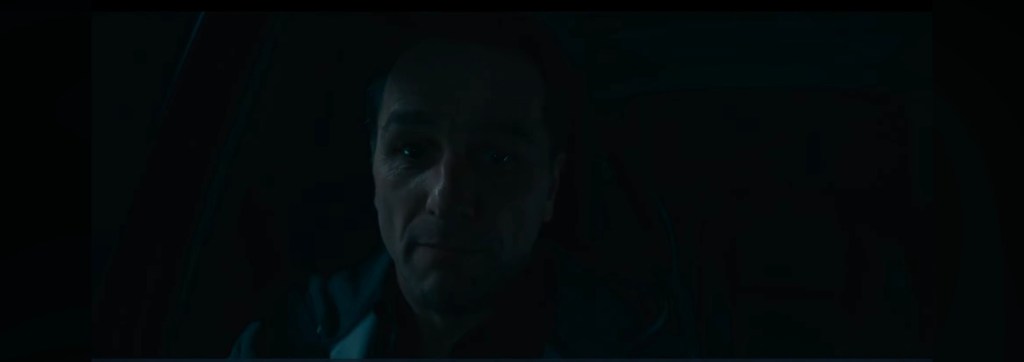
Matthew Rhys is the perfect counterbalance to Pike, offering a grounded portrayal of Frank that adds layers to their strained relationship. The tension between them feels lived-in, not just scripted, and their chemistry adds authenticity to the emotional stakes.
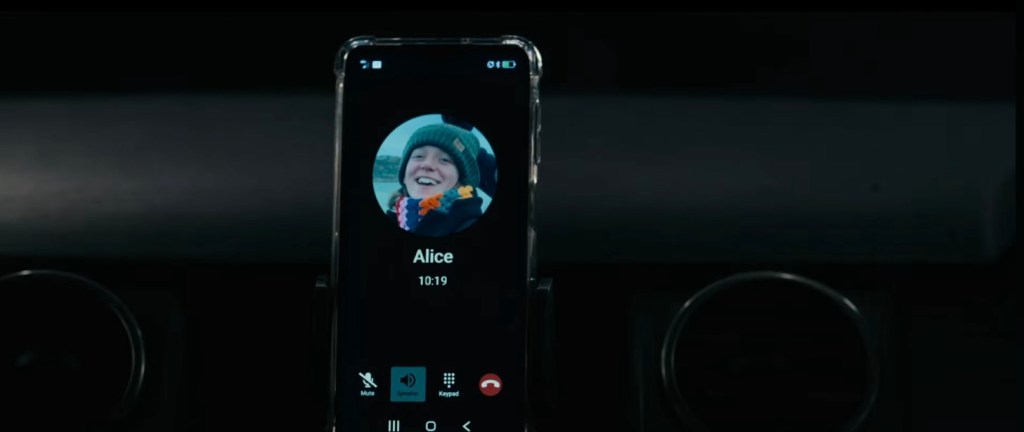
Of course, Megan McDonnell’s Alice, though mostly heard and rarely seen, is the emotional linchpin. Her voice carries the vulnerability and fear of a daughter in danger, and knowing Megan is family adds an extra layer of connection for me personally. It’s a reminder of the power a voice performance can have in creating presence and urgency without physical screen time.
The film’s technical elements also deserve praise. The cinematography by Joel Froome uses darkness and tight framing masterfully, turning the car’s interior into a claustrophobic cage. The surrounding forest is a character in itself—menacing, unknowable, and filled with shadows that hint at unseen dangers. Complementing this is the sound design, which uses silence and subtle ambient noises to ratchet up the tension without overwhelming the story.
Anvari’s direction is confident, showing he knows how to squeeze suspense and emotion from a minimal setting. Hallow Road doesn’t rely on jump scares or loud effects; instead, it builds dread through slow reveals and character moments that feel earned.
Hallow Road is a compelling psychological thriller that successfully blends family drama with supernatural mystery, anchored by strong performances and a haunting atmosphere. It’s a film that asks you to be patient, to listen carefully, and to feel the weight of unspoken fears alongside its characters. While the exposition-heavy early scenes and the late tonal shift toward the supernatural may not suit everyone, the emotional depth and quiet tension more than make up for these imperfections. For fans of slow-burn thrillers and intimate character studies, Hallow Road is a worthy addition to Babak Anvari’s growing body of work. And as someone who’s proud to call Megan McDonnell family, it’s heartening to see her voice bringing real emotional resonance to this tense and unsettling tale.
4 / 5 ✨ from the Screen Scribe.
(Images owned by and courtesy of Youtube)

 The Screen Scribe
Leave a comment