Star Wars: Episode IV – A New Hope, written and directed by George Lucas, is a foundational work of modern cinema and a landmark in science fiction and fantasy storytelling. Released in 1977, the film revolutionized special effects, redefined blockbuster filmmaking, and introduced audiences to a richly imagined galaxy that has since become one of the most beloved and enduring franchises in film history.

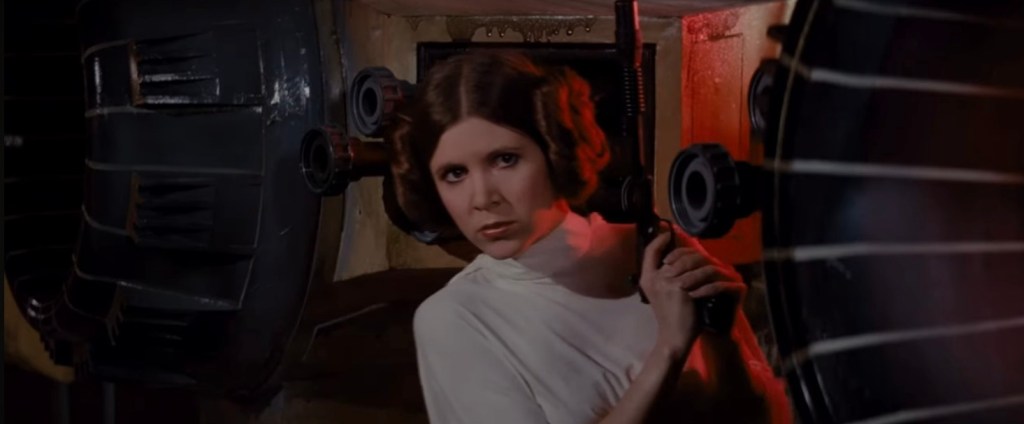
Set “a long time ago in a galaxy far, far away,” the story follows a young farm boy, Luke Skywalker (Mark Hamill), who becomes embroiled in a galactic conflict between the oppressive Empire and the heroic Rebel Alliance. After discovering a message hidden in the droid R2-D2 by Princess Leia (Carrie Fisher), Luke joins forces with Jedi Master Obi-Wan Kenobi (Alec Guinness), smuggler Han Solo (Harrison Ford), to rescue Leia and destroy the Empire’s ultimate weapon, the Death Star.
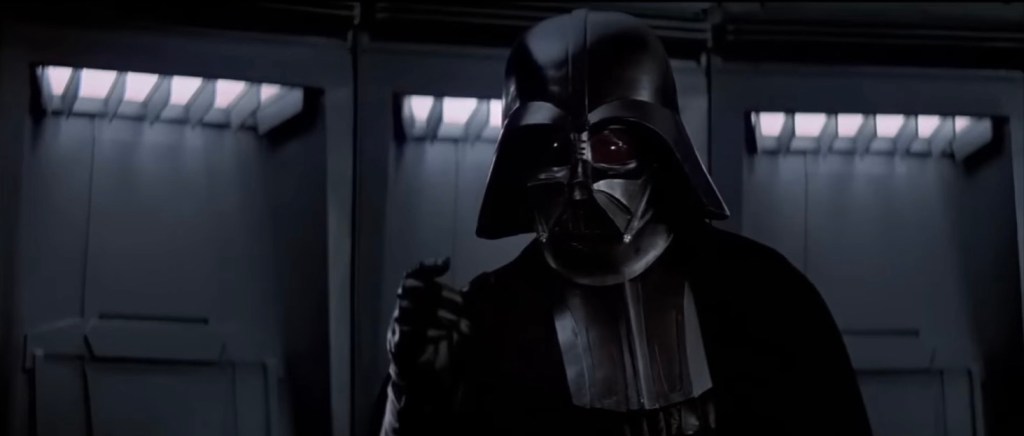
At its core, A New Hope is a classic hero’s journey, a narrative structure inspired by Joseph Campbell’s monomyth, that while simple is quite effective. Luke begins as an ordinary, reluctant youth and evolves into a hero with purpose and courage. This timeless arc, combined with memorable characters and emotional stakes, gives the film universal appeal and accessibility. The characters are archetypal but deeply charismatic: the wise mentor, the roguish hero, the noble princess, and the menacing villain, Darth Vader, who would become one of the most iconic antagonists in film history.
One of the most impressive aspects of A New Hope is its groundbreaking technical achievement. The film’s use of practical effects, model work, and innovative camera techniques (such as motion control) set a new standard for cinematic spectacle. The film’s sound design and John Williams’ sweeping orchestral score further elevate its grandeur, blending classical themes with futuristic elements.
Beyond its visual appeal, the film explores themes of hope, resistance against tyranny, the power of faith (embodied by the Force), and the belief that ordinary individuals can make extraordinary differences. These ideas resonate with audiences across generations and cultures, which is a key reason for the film’s enduring legacy.
Another strength of A New Hope lies in its world-building. Without overwhelming exposition, the film presents a lived-in universe full of mystery, history, and depth. The planets, ships, and alien species suggest a wider galaxy, sparking the imagination and inviting further exploration, a strategy that laid the foundation for an expansive franchise including sequels, prequels, spin-offs, and an entire media empire.
Star Wars: A New Hope is essential viewing for anyone interested in cinema, storytelling, or science fiction. Its impact on popular culture and filmmaking is immense, but beyond its historical importance, it remains a thrilling, emotionally satisfying, and entertaining film. Its themes are timeless, its characters unforgettable, and its message of hope—delivered in a galaxy far, far away—feels just as relevant today as it did in 1977. Whether you’re discovering it for the first time or revisiting it as a fan, A New Hope is a must-see experience that stands the test of time and continues to inspire generations.
(Images owned by and courtesy of Youtube)

 The Screen Scribe
Leave a comment