Your mission, should you choose to accept it, is to watch the final chapter of a franchise built on globe-trotting espionage, gravity-defying stunts, and Tom Cruise’s relentless sprint into the annals of action movie legend. For nearly thirty years, the Mission: Impossible series has delivered pulse-pounding thrills with a deft blend of slick storytelling and Cruise-fuelled madness. But this time, the fuse sputters. The Final Reckoning is not just the end of Ethan Hunt’s journey, it’s a lesson in how even the most sophisticated franchises can stumble when weighed down by self-importance, exposition, and too many moving pieces. This is a film that wants to be a finale, a retrospective, and a philosophical treatise on AI all at once. The result? A cinematic stew that’s heavy on talk, light on flavour, a bloated, breathless, and bewilderingly convoluted curtain call that spends more time explaining itself than actually thrilling us. This isn’t the fuse-burning, white-knuckle send-off Ethan Hunt deserves.
It’s the long-winded debrief no one asked for.
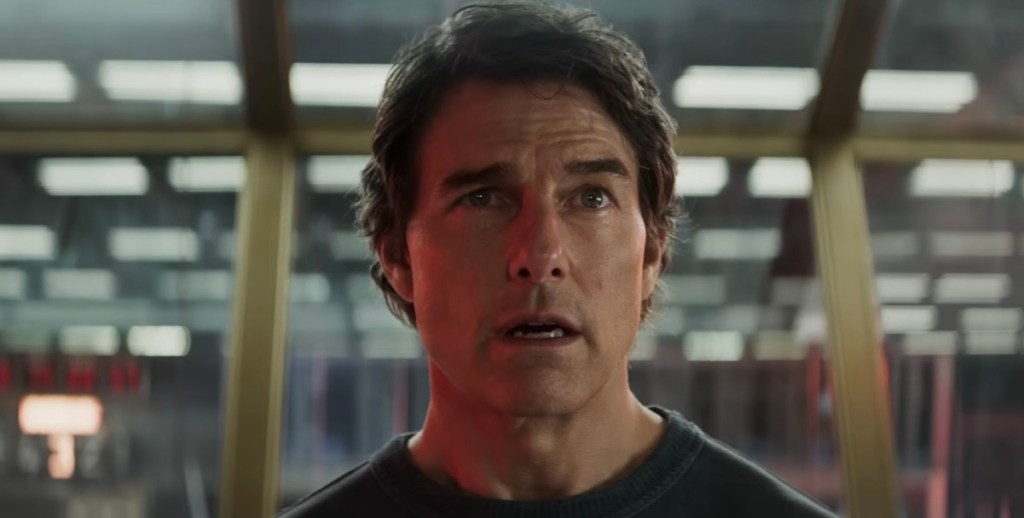
Picking up several months after Dead Reckoning, this chapter sees Ethan Hunt and his remaining IMF allies racing against time (again) to locate the downed Russian submarine Sevastopol, which houses the source code to the Entity, the rogue AI introduced in the previous film. The Entity is positioned as the ultimate threat—not just to governments or intelligence networks, but to free will itself. To gain control of it, Ethan must find the lost sub, navigate a convulated array of plans and governmental hoolahoops, and confront old ghosts, namely Gabriel (Esai Morales), a mercenary from his past with direct ties to his origin story.
Alongside him is Grace (Hayley Atwell), now in the fold and undergoing her own transformation into a potential future IMF agent. Benji and Luther return, largely in support roles, while the ghosts of characters lost in Dead Reckoning loom large, none more painfully than Ilsa Faust, whose absence is addressed with all the weight and reverence of a skipped scene. What should be a narrative driven by urgency and emotion too often buckles under its own need to explain, repeat, and reframe the stakes again and again.
Let’s be blunt: The Final Reckoning collapses under the weight of its own overreach. At nearly three hours, it’s a film that tries desperately to be an epic, a eulogy, and a tech thriller all at once—yet forgets to be fun. The screenplay is drowning in exposition. Characters stop the action cold to explain motivations, rehash mission objectives, and monologue about the Entity’s godlike potential. Every third scene feels like a briefing room update. Even the stakes are repeated, like the filmmakers don’t trust us to follow the bouncing MacGuffins.
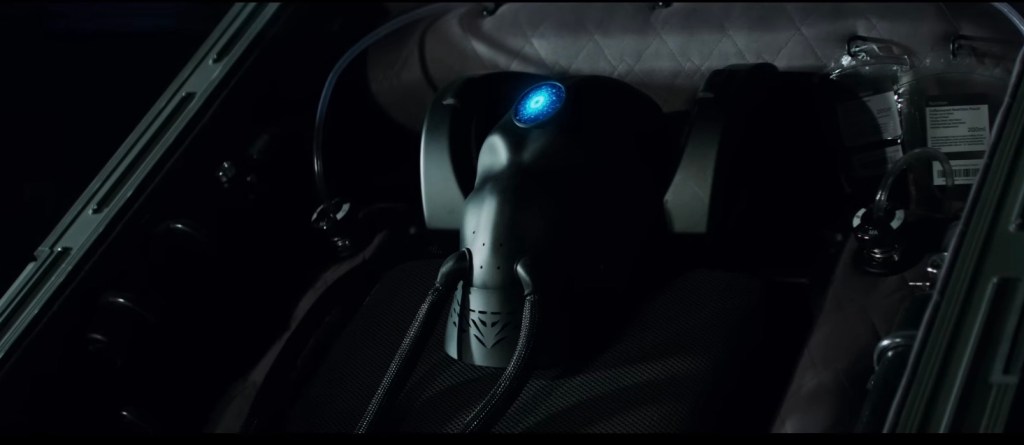
Speaking of which, the number of plot devices in play is absurd. There’s the cruciform key. The sunken sub. The AI code. The firewall. The miraculous USB tech prison that appears with no foreshadowing. And behind it all, a rogue AI that’s less HAL 9000 and more glorified plot lubricant. For a franchise once defined by clarity of objective—get the list, stop the virus, save the world—this is narrative bloat of MCU proportions.
And then there’s Gabriel. Esai Morales, normally a solid actor, is left adrift in a role that feels plucked from a Saturday morning cartoon. He drifts through scenes like a Bond villain parody, complete with cryptic one-liners, zero emotional depth, and a backstory that tries to tie him to Ethan’s origins in a way that feels clumsy and unearned. Whatever menace he might carry is undercut by how abstract the Entity remains—he was a mouthpiece for an algorithm, not a flesh-and-blood threat. And then through an unearned, and frankly perplexing, turn of events following Dead Reckoning, completely flips his loyalty card to the Entity.
Worst of all is the film’s treatment of its support characters. Benji and Luther are given scraps. Grace is promising but weighed down by overwritten dialogue. And Ilsa Faust? After her already sloppy send-off in Dead Reckoning, her absence here is given a single line of mourning and then brushed aside. It’s not just a missed opportunity, it’s a disservice to one of the series’ most dynamic characters whose fate remains a truly baffling and unexplained decision.
The climax, set in the African desert, is all bark and no bite. The dual airplane set piece is meant to be the big jaw-dropper, but it’s awkwardly edited, murkily staged, and lacks the visceral, immediate danger of Fallout’s helicopter sequence. It’s a finale that feels like it was designed in pre-vis software before anyone asked if it was actually… compelling.
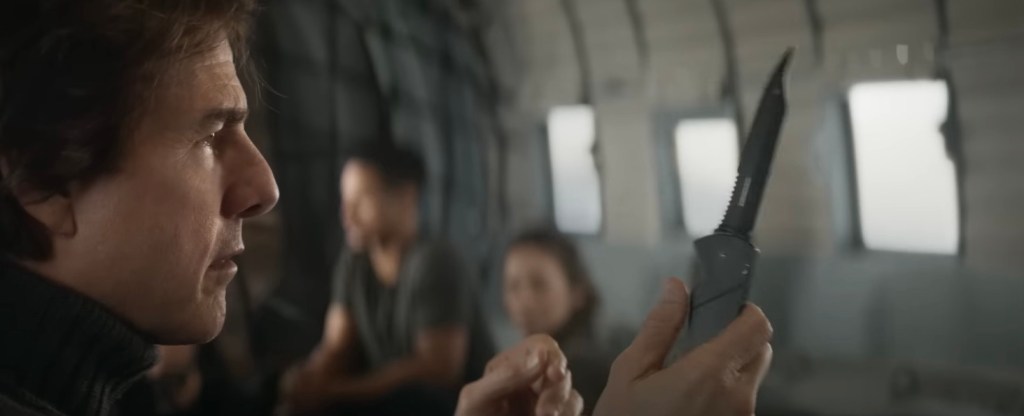
Tom Cruise, to his credit, is still all-in. Whether sprinting through dusty airstrips, hanging from cockpits, or scowling at mission briefings, he remains ferociously committed to this role. You can feel his desire to elevate the material, to make this land as a proper goodbye—even if the film doesn’t support him.
Hayley Atwell continues to shine as Grace. She brings levity, nuance, and a slightly chaotic edge to the story, proving herself a worthy addition to the franchise. If the series does get rebooted or reshaped, she’d be a solid foundation. But I feel we all can’t but help mourn the loss of Ilsa, possibly the most interesting character in the franchise aside from Hunt and who could have carried this franchise forward if the desire was there.
The technical craftsmanship is also still present, if buried. The cinematography captures some striking moments in the underwater and Arctic sequences, and the practical stunt work—when it’s allowed to take center stage—remains impressive. Max Aruj and Alfie Godfrey’s score does respectable work, though it lacks the pulse-raising drive of previous entries scored by Lorne Balfe. It’s functional, but never iconic.
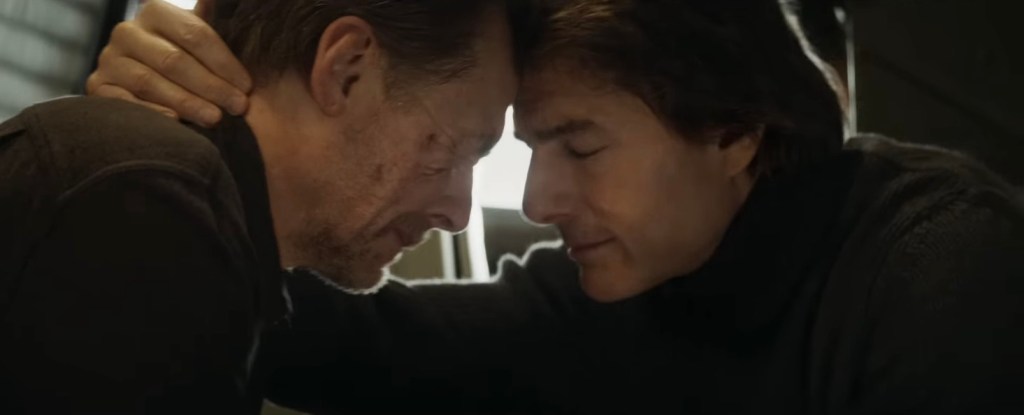
Mission: Impossible – The Final Reckoning should have been a victory lap. Instead, it’s a drawn-out lecture, a muddled thesis on AI paranoia and spycraft ethics wrapped in a story that forgets to thrill. It tries to say goodbye with weight and significance but forgets that this franchise was at its best when it kept things simple: one mission, one clear goal, and a man willing to do anything to see it through. Instead, we get a finale overstuffed with techno-babble, underwritten character arcs, and a villain who feels like he wandered in from an old school Bond film. Cruise may still run like the world is ending, but this time, he’s running in circles. This finale should have adhered to its own tradition and self-destructed far sooner than its almost three hour run time.
2.5 / 5 ✨from the Screen Scribe.
(all images are courtesy of and owned by Youtube)

 The Screen Scribe
Leave a comment