In a world where everyone and their house cat seems to have a tragic backstory and a license to kill, it was only a matter of time before John Wick got a spin-off in slippers. Ballerina twirls onto the blood-slicked stage with Ana de Armas, aiming to blend grace with gunfire, pliés with point-blank execution. It’s a killer concept on paper: take the most elegant form of art, lace it with trauma, and let the bullets fly in rhythm. And yet, for a film rooted in the operatic chaos of the John Wick universe, a place where coin economies, blood oaths, and bespoke bulletproof tailoring are treated with Shakespearean gravitas, Ballerina never quite finds its tempo. It wants to dance in the same league as Wick’s symphony of violence but ends up toe-tapping through a dress rehearsal of better ideas. The stage is set, the cues are familiar, but the spotlight never quite lands where it should.
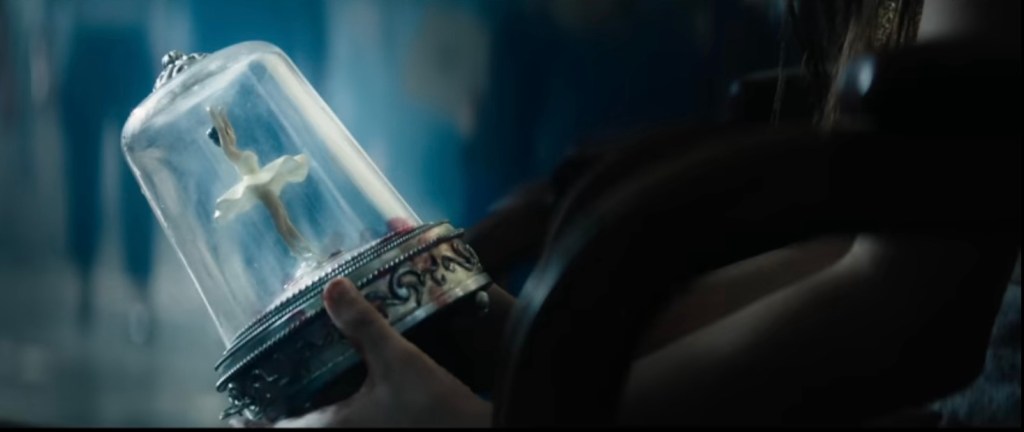
Set between the events of John Wick: Chapter 3 and Chapter 4, Ballerina follows Eve Macarro, a highly trained assassin raised within the Ruska Roma crime syndicate, where ballet and brutality are taught side by side. Haunted by the murder of her family, Eve embarks on a mission of revenge that leads her deep into the shadowy corners of the underworld. Along the way, she encounters familiar faces from the John Wick mythos, some allies, some not, as she uncovers a conspiracy that ties directly into her past. Stylish, action-packed, and emotionally charged, the film blends elegance with lethality in true franchise fashion as Eve fights to carve out her own legend in a world that already belongs to another myth.

For a film nearly a decade in the making, having entered development back in 2017, Ballerina feels oddly undercooked. The most glaring issue? The Cult, our antagonistic force, is more idea than entity. We’re told they’re dangerous. We’re shown they’re organized. But not once do they feel as intricate or intimidating as The High Table, The Adjudicator, or even the Bowery King’s operation. It’s like someone gestured vaguely at “sinister cabal” on a whiteboard and decided that was enough.
Eve’s journey is similarly sketchy. While Ana de Armas brings physical commitment and stoic intensity to the role, the character of Eve feels emotionally inert. Flat, even. There are glimpses of humanity, but they’re fleeting, overwhelmed by a revenge plot that’s more procedural than personal, and more often contrived to the point of annoyance. Considering her trauma and the potential depth of her backstory, it’s disappointing that Eve often feels like a series of well-lit stares rather than a fully realized person.
Then there’s the Kikimora angle, an idea brimming with potential that ends up squandered. The Kikimora, introduced as a specialized protector-assassin unit within the Ruska Roma, are mentioned but never meaningfully explored. Eve’s father apparently was a Kikimora, yet this whole concept is treated more like a throwaway detail than what could have evolved into a mythological mantle. Had the film embraced this title as a singular moniker to be passed onto Eve, giving her a title akin to Wick’s “Baba Yaga”, it could have granted her the iconic identity she so desperately lacks. Instead, the idea flutters in and out like a forgotten prop.
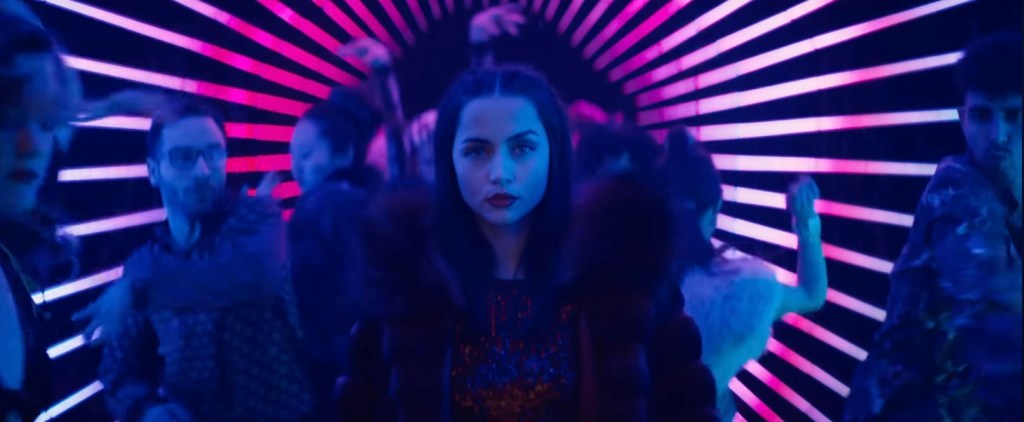
Despite its narrative stumbles, Ballerina still moves with lethal elegance where it counts: the action. The choreography holds true to the Wick formula, crisp, brutal, and balletic (fittingly). Fights unfold with a dancer’s precision, blending firearms and hand-to-hand combat in kinetic bursts of violence that occasionally rival the mainline series. De Armas, while underserved dramatically, proves herself more than capable physically. Her work here is tireless and fluid, selling every brutal exchange with the kind of commitment we’ve come to expect from seasoned Wick alumni. There’s no doubting her physical credibility, even when the script fails to back it up with emotional weight.
The production design remains sharp, filled with gothic interiors, underground hideouts, and elegantly lit death traps. The cinematography captures the aesthetic DNA of the franchise: shadowy opulence meets kinetic mayhem. The music, composed by franchise regulars Tyler Bates and Joel J. Richard, doesn’t reinvent the wheel but underscores the tension with industrial thrum and operatic swells. It’s also a pleasure to revisit familiar haunts and characters. McShane’s Winston oozes charm and menace in equal measure, and the late Lance Reddick’s final turn as Charon adds a bittersweet gravitas. Even John Wick himself makes an appearance, though wisely kept in the periphery to avoid eclipsing the film’s supposed lead.
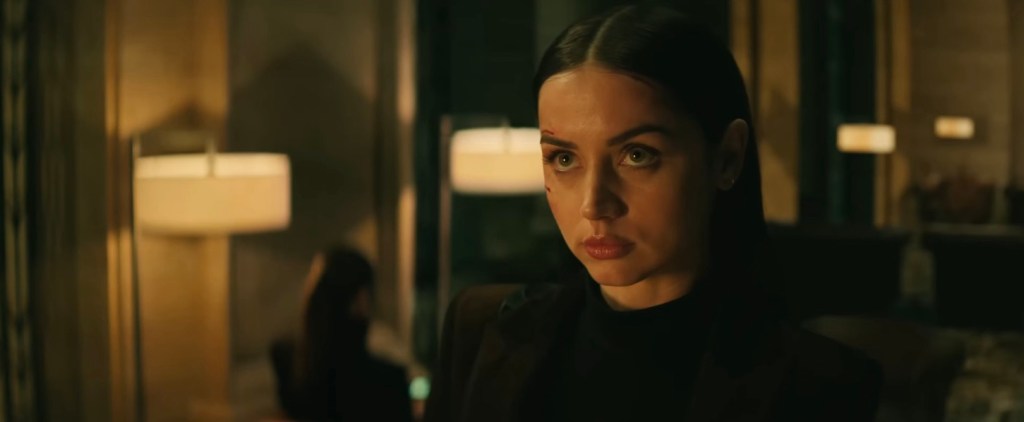
Ballerina walks in the shoes of giants but forgets to find its own rhythm. It ticks every John Wick box on paper, elaborate lore, stylish kills, a revenge-driven antihero, but the soul feels missing. De Armas works hard, the action meets the mark, and the visual language is consistent, but the story dances around deeper meaning without ever landing a blow to the heart. In the end, Ballerina is a spin-off that mimics the moves but lacks the mythos. With tighter writing, a richer villain, and a deeper emotional core, perhaps built around the Kikimora legacy, it could’ve earned its place beside Wick. Instead, it remains a shadowy silhouette twirling in the wings, awaiting a second act that may never come.
2.5 / 5 ✨ from the Screen Scribe.
(Images courtesy of and owned by Youtube)

 The Screen Scribe
Leave a comment