
There is a scene halfway through the first season of True Detective that plays out like a fever dream. A six-minute tracking shot snakes through a housing project in Louisiana as drug raids spiral into chaos. Gunshots. Barking dogs. Neon halos from broken floodlights. It is not just a technical marvel, though it certainly is that. It is a moment that crystallises what the series does best. The chaos is thrilling, but it never forgets the haunted men at its centre, running through the dark with ghosts strapped to their backs.

Premiering in 2014, True Detective Season One arrived at the crest of the prestige television wave and instantly stood apart. Created by Nic Pizzolatto and directed in its entirety by Cary Joji Fukunaga, the first season tells a self-contained story across eight episodes. It follows Louisiana State Police detectives Rust Cohle (Matthew McConaughey) and Marty Hart (Woody Harrelson) as they investigate the ritualistic murder of a young woman in the swamps of 1995 Louisiana. The case appears closed, but seventeen years later, when similar crimes resurface, both men are pulled back into a mystery that has never really let them go.
That description, while accurate, does not begin to capture the gravitational pull of the series. On the surface, it is a procedural crime drama. Underneath, it is a meditation on morality, time, and the corrosive weight of memory. The dual timelines, one in the past, one in the present, allow the show to explore not just what happened, but who these men became as a result. Each episode layers new context, not just about the crime, but about the men who chased it.
The reasons to watch are many. First and foremost, the performances. McConaughey, in the middle of his career resurgence, gives a performance that is both mesmerising and deeply sad. His Rust Cohle is a man unravelled and rewound so many times he barely resembles a person anymore. Philosophical, withdrawn, and occasionally terrifying, Cohle speaks like a man who has stared into the abyss and taken notes. Harrelson, by contrast, plays Marty as a deeply flawed but recognisably human figure, full of contradictions, selfishness, and charm. Together, their chemistry anchors the show. They bicker, they clash, but in the spaces between the words, they reveal a strange, broken kind of friendship.
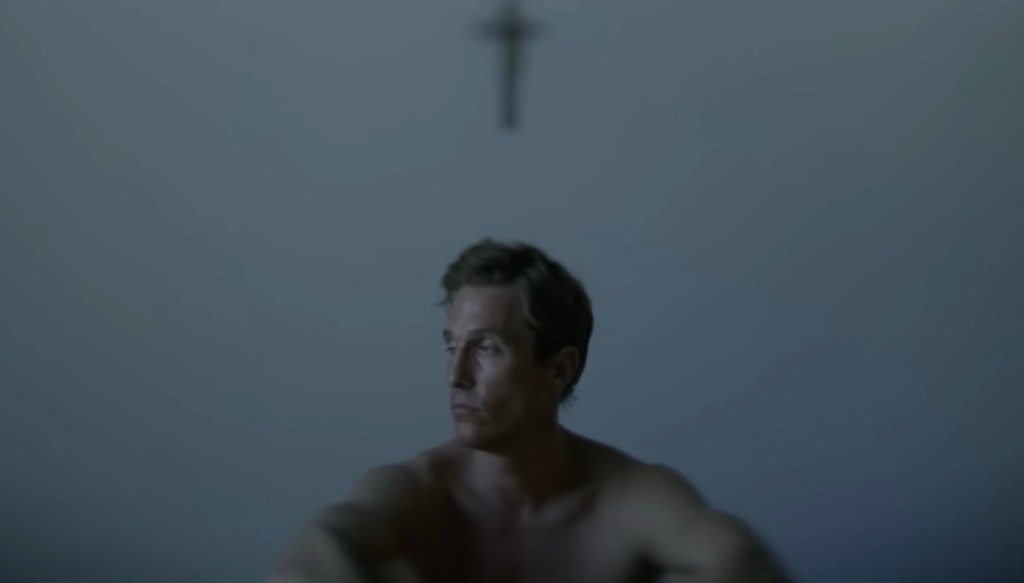
The writing is dense, literary, and often bleak. Pizzolatto draws on cosmic horror, Southern Gothic traditions, and pulp detective fiction to create a world that feels both mythic and grounded. Cohle’s musings on time, death, and the illusion of self are not there for show. They echo the themes of the entire narrative, which turns out to be less about solving a murder and more about enduring one’s own life.
Fukunaga’s direction is cinematic without ever being indulgent. Every frame has weight. The Louisiana setting, flat, humid, rotting, feels like a character in itself. Rusted churches, empty fields, gas stations on the edge of nowhere. The landscape is as desolate as the people in it. T Bone Burnett’s music supervision leans heavy on swamp blues and haunted folk, perfectly complementing the mood without pushing too hard.
But for all its darkness, True Detective Season One never becomes nihilistic. It peers into the void but does not leap. The ending is divisive for some, but it dares to offer something fragile and rare in stories like this, a glimmer of hope, however faint.
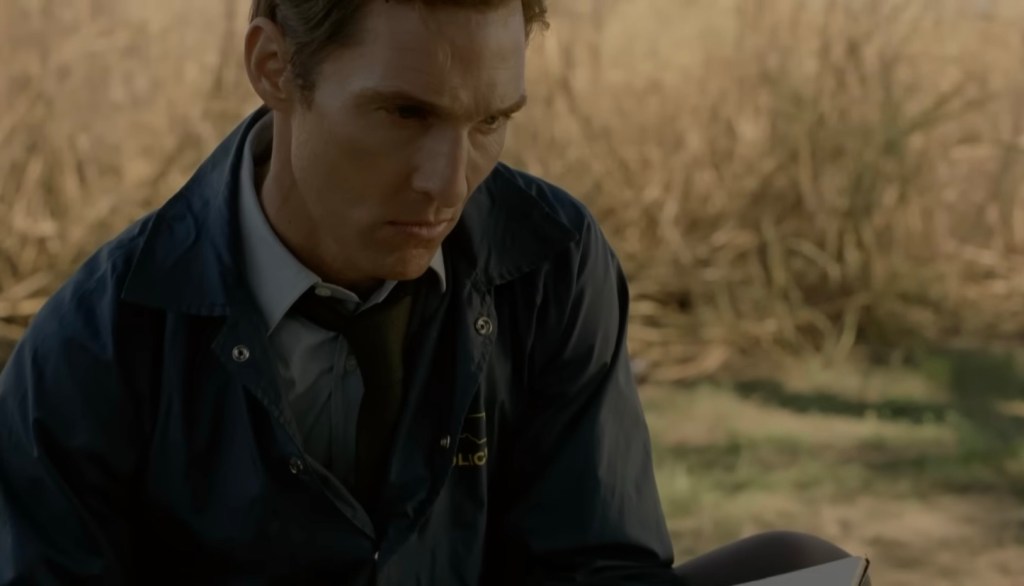
If you have never seen it, or only heard about it in passing, now is the time. This is television as literature. Television as cinema. Television that trusts its audience to sit with discomfort and pay attention. In a world full of loud, busy storytelling, True Detective whispers, and when you lean in close, what you find is unforgettable.
Watch it not for the twists, but for the questions it asks and the men it follows as they try, and often fail, to answer them.
A true masterpiece of television.
(All images owned by and courtesy of Youtube)

 The Screen Scribe
Leave a comment