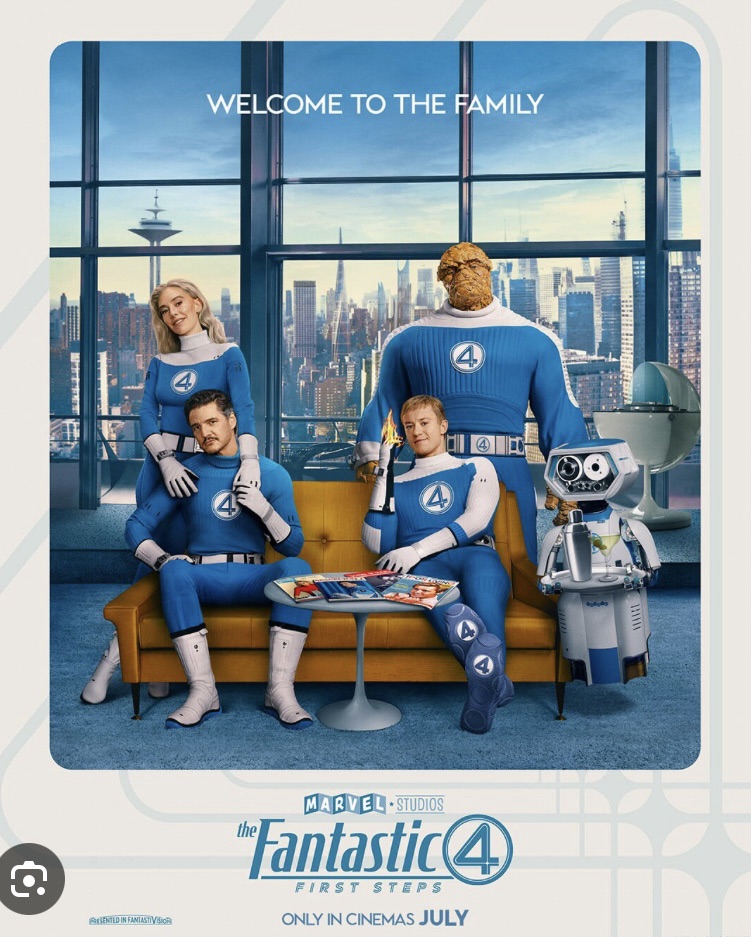
In a franchise built on blueprints, Marvel has finally stopped following one. Fantastic Four: First Steps is not a reset just for the characters, it is a creative exhale. There are no blinking portals, no winking cameos, no characters appearing in clouds to tease Phase Ten. What we get instead is something that has been missing from the MCU for years. A sense of direction. A sense of style. But perhaps most importantly, a soul.
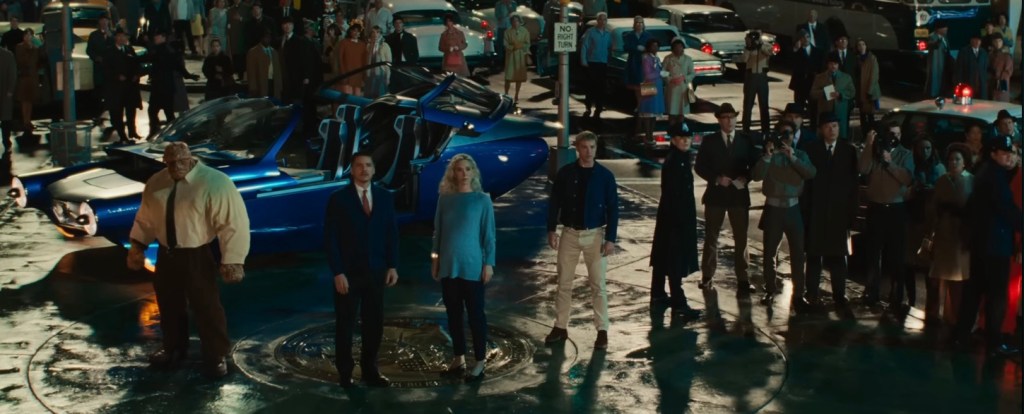
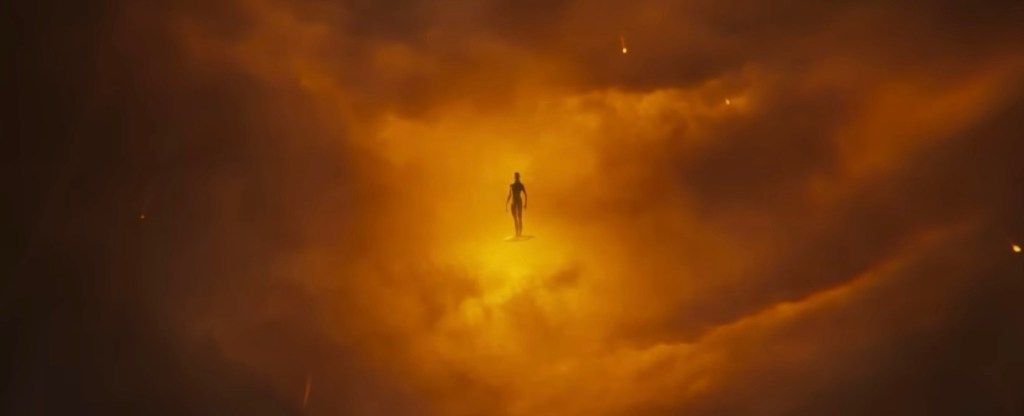
Set in an alternate Earth in the mid-sixties, complete with flying cars, go-go boots, and chrome everything, this world is suspended in silver age optimism and retro futurist flair, somewhere between NASA and The Jetsons. This version of the Fantastic Four is already formed, already famous, and already living with the consequences of having their molecules scrambled in space. There is no origin story here. Just a team trying to stay a family as something much bigger looms. The Silver Surfer touches down with a grim message for Earth. The devourer of worlds, Galactus, is coming for their home. Reed Richards, ever the genius, confirms the threat and hatches a plan. The conflict escalates into space, into battle, and into one final choice that tests the strength of their bond, and yes, for once, Marvel lets the ending be an ending.
That summary may sound bloated, but what works is how contained it all feels. The film does not spiral outward. It focuses in. It takes its time with atmosphere, with dynamics, with texture. Which is why it is such a shame when the pacing sputters around the halfway mark. For all the clean design work and character moments early on, the middle third loses momentum. Scenes feel shuffled. Subplots vanish. A few lines feel ADR’d in to stitch together a missing sequence. The climax is visually satisfying but arrives just a little too fast and leaves just a little too much emotional weight on the cutting room floor.
The cast carries the film through most of its turbulence. Vanessa Kirby gives Sue Storm the kind of depth the role has never truly been allowed before. She is sharp, compassionate, and absolutely the center of the team’s gravity. Joseph Quinn gives Johnny Storm enough energy to power half the grid, all quips and impulsive fireballs, but also moments of quiet sincerity that keep him from feeling hollow. Ebon Moss-Bachrach is the emotional anchor as Ben Grimm, selling the voice, the weight, the sadness, and the sweetness all at once. His Thing is not just believable, he is lovable.
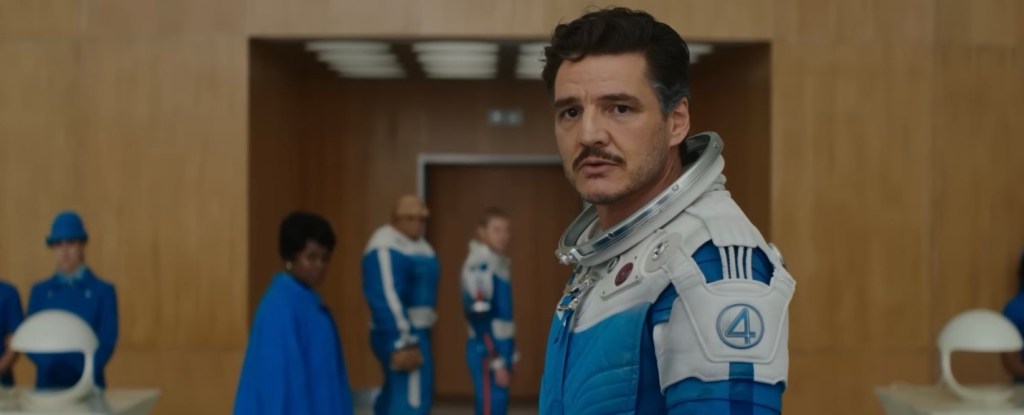
But then there is Reed. Pedro Pascal is a strange choice on paper, and a stranger one on screen. His take on Richards is cerebral to the point of detachment. You can see what the script is aiming for, a man who lives in his own head, brilliant but unreachable, and Pascal does not miss that target. But the cost is that he feels like he is acting from a few rooms away, even when he is in the scene. It does not sink the chemistry, but it does create a noticeable gap in the emotional energy of the group.
Visually, the film is a triumph of tone. The retro design is not a gimmick. It feels lived in and consistent, from the typography of government briefings to the texture of the team’s suits. The visual effects are impressive without being overwhelming. Each power feels tailored to the world. Reed’s stretchiness avoids the rubbery chaos of past versions. Johnny’s fire lights up the frame without looking synthetic. Sue’s force fields have a subtle shimmer. And Ben? Ben looks like he walked off the page of a Kirby panel, all cracked stone and expressive eyes.
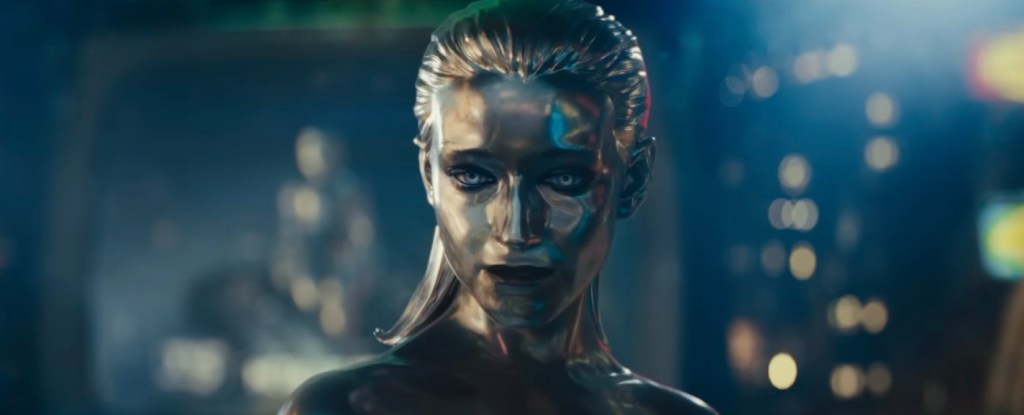
Galactus is well designed, imposing, blessedly comic accurate, and shot with scale. But narratively, he does feel thin and somewhat detached from his traditional motivations. He works as a metaphor, as a force of nature, but never quite lands as a character. The Silver Surfer fares better, her presence has elegance, menace, and a kind of cosmic sorrow that hints at a larger story. But she is barely given time to speak before the finale hits. These are not deal breakers, but they are missed opportunities, and mouthwatering teases for a future in the Marvel Cosmic sandbox post-Multiverse Saga.
What makes First Steps land is not its villain. It is its sincerity. It is not trying to be clever. It is not setting up ten more movies. It is telling one story, about four people who have been altered by science and space, and who are trying to find a way to stay human anyway. It trusts the audience to care about that. It gives the actors room to breathe. It lets the art direction matter. It remembers that Marvel, once upon a time, was about ideas and feelings, not just spectacle and synergy.
The score complements the tone without feeling self-aware. The direction is clean, bold in places, and occasionally even beautiful. But best of all, when the film ends, it does not leave you hanging. There is a mid-credits beat, yes, but it feels earned. Not a preview. Not a sales pitch. Just a continuation of character and story.
Fantastic Four: First Steps is not the most explosive Marvel film. It is not the loudest or the most expensive. But it might be the most thoughtful in recent times. It has charm. It has heart. But most importantly, it has something Marvel has been missing for a while now. A point of view. Whether it changes the MCU or not remains to be seen. But as a film? It stands tall on its own. A strong reboot. A bold detour. A reminder of how great Marvel used to be.
3 / 5 ✨ from the Screen Scribe.
(All images are owned by and courtesy of Youtube)

 The Screen Scribe
Leave a comment