There was a time when the Marvel logo flickering onto your screen promised excitement, ambition, and cultural conversation for weeks. But that time feels like a fading memory now. Ironheart, Marvel’s latest Disney+ series, arrives with the limp inevitability of a direct-to-streaming release designed to fulfil contractual obligations rather than genuine fan demand. It is not awful. It is not great. It is simply there, a passable, inoffensive time killer that lands with all the impact of a pebble tossed into an ocean of superhero content already gasping for relevance. The most damning thing about Ironheart is not that it is bad, but that it is utterly bland.

Ironheart follows Riri Williams (Dominique Thorne), a teenage tech prodigy and MIT engineering student, who returns to campus life after her brief introduction in Black Panther: Wakanda Forever. Still grappling with the exposure and expectations that come with her self-built Iron suit, Riri finds herself caught between the worlds of science and something darker when her designs draw the attention of forces far beyond her imagining.
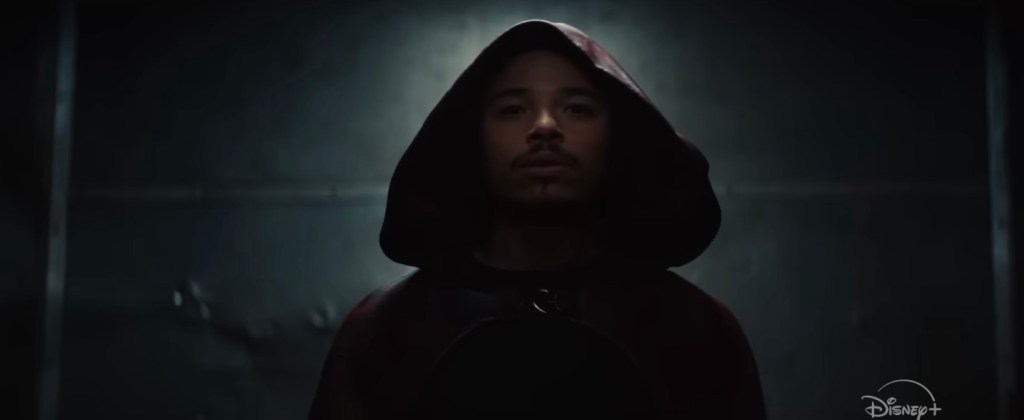
As Riri refines her suit and her sense of purpose, she becomes entangled with Parker Robbins, also known as The Hood (Anthony Ramos), a street-level villain whose newfound powers appear rooted in something much darker than simple sorcery. Their clash sets up a series that promises a fresh tech-versus-magic conflict within the MCU. But lurking behind this rivalry is a larger, more sinister presence, a long-whispered figure finally brought to life, fulfilling a fan casting dream that will spark debates across forums for weeks to come.
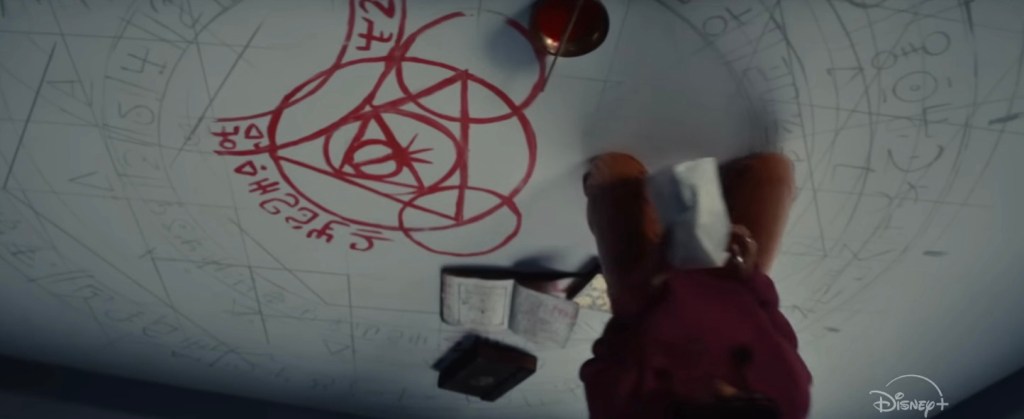
Unfortunately, Ironheart never figures out what kind of story it wants to tell. The tech-versus-magic premise is genuinely clever, offering a way to expand the MCU’s scope into supernatural realms without leaning on wizards or aliens. But the series never explores this idea with thematic depth. Instead, it settles for lacklustre action and exposition dumps, robbing the premise of tension or philosophical intrigue.
The writing treads overly familiar ground. Young hero grapples with self-doubt, clashes with mentors, and delivers motivational monologues to side characters who exist purely to support her arc. We have seen it before i.e Ms Marvel, which at the very least had an earnest innocence to it, but Ironheart adds nothing new to this formula. It is superhero storytelling by committee, hitting every expected beat with mechanical precision but devoid of personal vision or daring.
Pacing also drags. Even at six episodes, the narrative feels padded with redundant subplots about academic sabotage and half-baked romance drama, while its major emotional shifts are rushed through montage or clunky dialogue exchanges. These filler scenes dilute the urgency of Riri’s central conflict.
Then there is the fundamental challenge of Riri Williams herself. Dominique Thorne delivers a performance choked with smugness, arrogance and a lack of self-awareness (this is not a diss on the actress, but the character). Quite simply, she is unlikeable. Riri has never resonated deeply with the wider Marvel fanbase, either in comics or now on screen. She is essentially a re-skinned Iron Man without Tony Stark’s layered flaws or cultural weight. In an MCU already crowded with tech geniuses i.e. Peter Parker, Shuri, Hank Pym, Rocket, and now Reed Richards and Viktor Von Doom, there is simply no niche left for her to fill meaningfully.

Despite its flaws, Ironheart has moments of genuine promise. Dominique Thorne anchors the series with quiet charisma, selling Riri’s intelligence and moments of vulnerability even when the writing lets her down. The Hood’s introduction is also a highlight. Anthony Ramos brings roguish charm and menace to the role, and while underused, his presence hints at a larger mystical dimension in the MCU worth exploring further. Without spoiling specifics, the eventual reveal of a long-demanded fan-cast villain adds intriguing cosmic stakes to an otherwise grounded series, offering the only real spark of excitement in its final episodes.
Visually, Ironheart maintains Marvel’s high production standards. Suit-up sequences feel tactile and well-composited, while action set pieces, though derivative, are cleanly choreographed and immersive enough to keep genre fans engaged.
Ironheart is the MCU on autopilot. It is competently made, decently acted, and conceptually interesting in fleeting moments. But it is also uninspired, safe, and ultimately unnecessary. There is no spark here, no thematic urgency or bold storytelling choice to justify its existence beyond expanding Disney+ content libraries. For die-hard Marvel completionists, it will pass the time. For everyone else, it is another reminder that the MCU’s golden age of cultural dominance is over, and if this is what its future holds, derivative spin-offs clinging to fading iconography, then maybe it is time we let the suit rest in peace.
1.5 / 5 ✨ from the Screen Scribe.
(All images are owned by and courtesy of Youtube)

 The Screen Scribe
Leave a comment