
The Alien franchise has always thrived on dread, dark corridors, blinking motion trackers, and the nagging suspicion that humanity’s hubris will be its undoing. So when Noah Hawley brought the series to television with Alien: Earth, expectations were cautious, but optimistic. Could a weekly show capture the suffocating terror of Ridley Scott’s 1979 classic, or the visceral action of James Cameron’s Aliens? The result is ambitious, stylish, and bold, but also divisive. Critics have largely embraced its artistry, while audiences have been far more conflicted, and in that gap lies the real story of Alien: Earth.

Set in 2120, two years before Ripley’s doomed voyage on the Nostromo, the series moves the horror out of deep space and onto the corporate-run ‘Neverland’, a research island where the Prodigy Corporation has been tinkering with consciousness and synthetic humans. When a vessel carrying extraterrestrial cargo crashes to Earth, the fragile balance of corporate intrigue, hybrid experiments, and human desperation unravels. It’s a clever setup. The monsters are no longer confined to isolated ships or distant planets, they’re here, threatening the cradle of humanity itself.

But if the premise is tantalising, the execution isn’t without flaws. The first stumbling block is pacing. At eight episodes, the series has time to breathe, yet too often the narrative sprawls, and unfortunately, spreads itself thin. Threads about corporate espionage, synthetic hybrids, and identity transfer compete with the central xenomorph threat, leaving the show feeling overstuffed. The early episodes crackle with promise, but the momentum dips midseason, frustrating viewers who tuned in for sustained tension rather than boardroom drama.
Characters, too, are uneven. Some arcs land, particularly the hybrids, whose existence raises chilling questions about what it means to be human, which is great in theory, but the delivery is somewhat…lacking. Others feel underwritten, drifting through the chaos with motivations that shift more for plot convenience than psychological truth. On fan forums, this has been a common refrain, Alien is supposed to be about people we care for facing something utterly inhuman. Too often here, the people feel like pawns, less memorable than the shadows they inhabit.
The series also wrestles with the age-old horror problem, how much to show. Alien thrived on suggestion, the creature glimpsed in strobe lights, the terror of the unseen. Alien: Earth sometimes tips too far in the other direction. Extended looks at the xenomorphs and new alien variants satisfy curiosity but sap mystery. By revealing too much too soon, the menace is dulled. It doesn’t help that the finale leans on a cliffhanger, leaving some viewers more irritated than eager for season two.
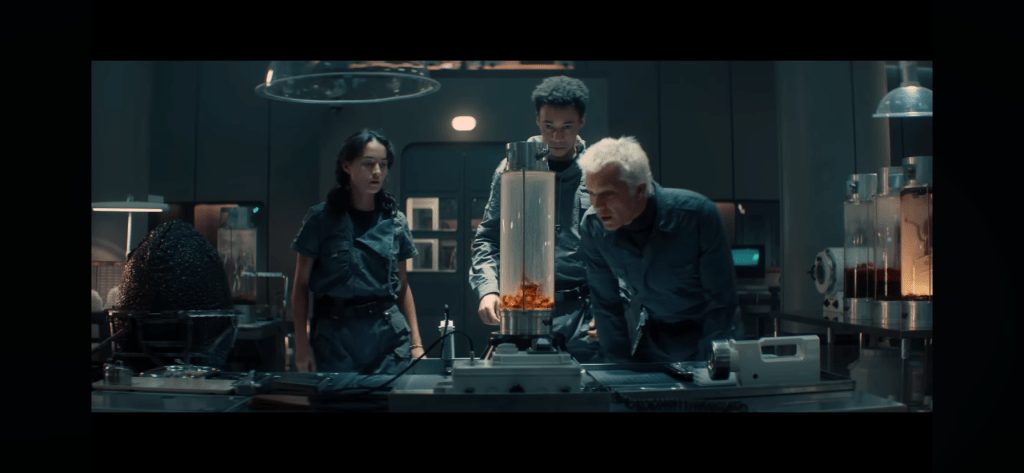
And yet, for all these frustrations, Alien: Earth does deliver moments of brilliance. The production design is impeccable. Neverland feels oppressive and tactile, a fusion of corporate dystopia and bio-horror playground. The prosthetics work, especially the reimagined chestburster sequences, honouring the franchise’s grotesque legacy while adding its own spin. The sound design, those low mechanical hums, the guttural alien screeches, wrap each episode in a shroud of unease. When the series leans into pure horror, it reminds you exactly why this franchise endures.
Thematically, it’s ambitious in ways blockbuster cinema often isn’t. Questions of identity, corporate exploitation, and the morality of science gone unchecked ripple through every episode. Hawley clearly isn’t content to deliver a simple monster-of-the-week. He wants to expand the mythology, to take Alien from haunted house horror into something more expansive, more unsettling. It doesn’t always succeed, but you have to admire the attempt.
This is why critics have largely been kind. On Rotten Tomatoes, the show boasts a score in the 90s, with reviews praising its atmosphere, artistry, and willingness to push boundaries. Some even call it “Andor for Alien”, a franchise expanded and deepened through television. Audiences, though, are less impressed. Rotten Tomatoes’ user score sits around the mid-60s, with complaints about slow pacing, muddled writing, and a lack of genuine scares. It’s a fascinating divide as critics champion ambition, while fans lament the execution.
So where does that leave Alien: Earth? Somewhere in the middle. It is not the disaster some disappointed viewers claim, nor is it the unqualified triumph that glowing reviews suggest. It’s a show of moments, sometimes maddening, sometimes mesmerising. At its best, it delivers bone-deep dread and philosophical bite. At its worst, it meanders and frustrates. Character choices are often non-sensical. The new alien threats are left mostly unexplored. The questions about where they found them remain unanswered, considering at that point in the timeline, there are not very many locations rife with xenomorph eggs. Alien: Earth is an imperfect experiment.
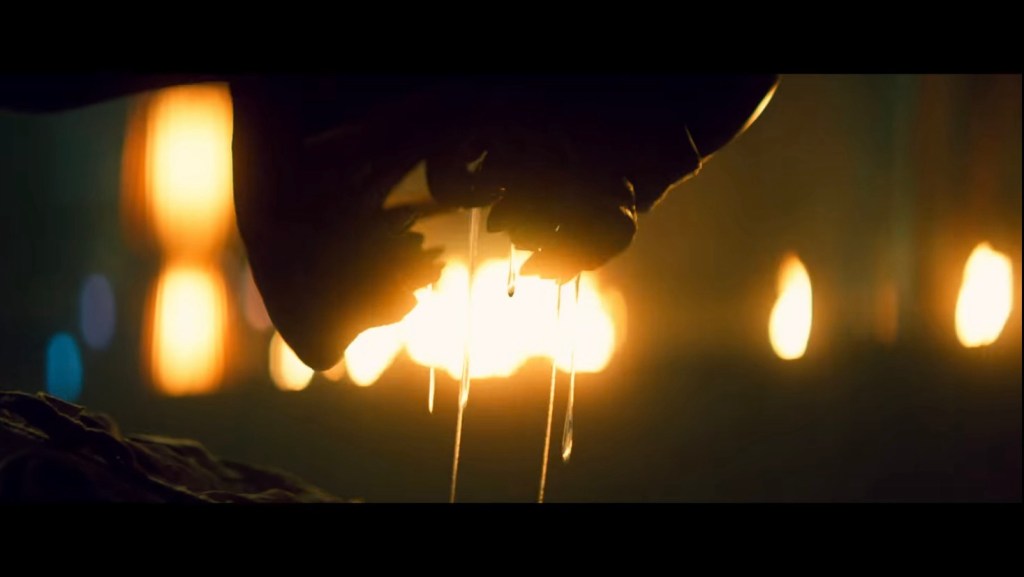
But perhaps that’s fitting. The Alien franchise has always been about survival against impossible odds, about imperfect people in over their heads. Alien: Earth may not be flawless, but it proves the franchise still has teeth, still has something to say. Whether audiences stick around to listen may determine if this experiment becomes a new cornerstone, or a curious footnote, in one of sci-fi’s greatest sagas. Ambitious, stylish, and occasionally terrifying, Alien: Earth expands the franchise with daring ideas but struggles with pacing and character depth. A show caught between critical acclaim and fan frustration, it’s a fascinating but uneven entry in the Alien mythos.
A generous 2.5 / 5 ✨from the Screen Scribe.
(All images are owned by and courtesy of Youtube)

 The Screen Scribe
Leave a comment