Steven Knight has carved out a reputation for turning working-class grit and history into riveting television. With Peaky Blinders, he transformed the streets of Small Heath, Birmingham, into a living, breathing character, every cobblestone dripping with atmosphere and menace. When Netflix announced Knight’s next historical drama, House of Guinness, the parallels were inevitable. Dublin, 1868. The Guinness dynasty. Family intrigue and national unrest. On paper, it should have been a perfect storm. In practice, it’s a stylish and intriguing show, but one that never quite finds the spark, the bite, or the edge of Knight’s earlier masterpiece.
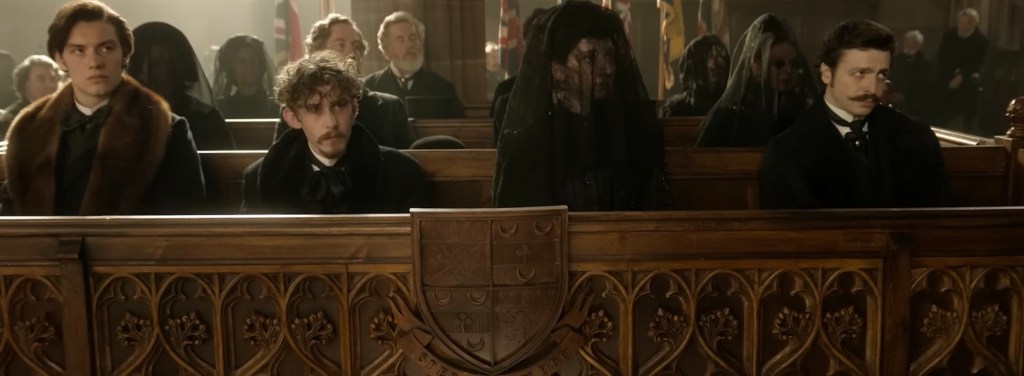
The story begins with the death of Benjamin Guinness, patriarch of the brewing empire, and follows the fallout as his children, Arthur, Edward, Anne, and Benjamin Jr., wrestle for control. Around them swirl corporate rivalries, brewing magnates, Fenian unrest, illicit trades, and romantic entanglements, all converging on Dublin at a time of political and cultural volatility. James Norton anchors much of the action as Sean Rafferty, a brewery foreman caught between loyalty and ambition, while a cast of familiar Irish and British names fill out the sprawling ensemble. The premise is pure dynastic drama: Succession with stout.
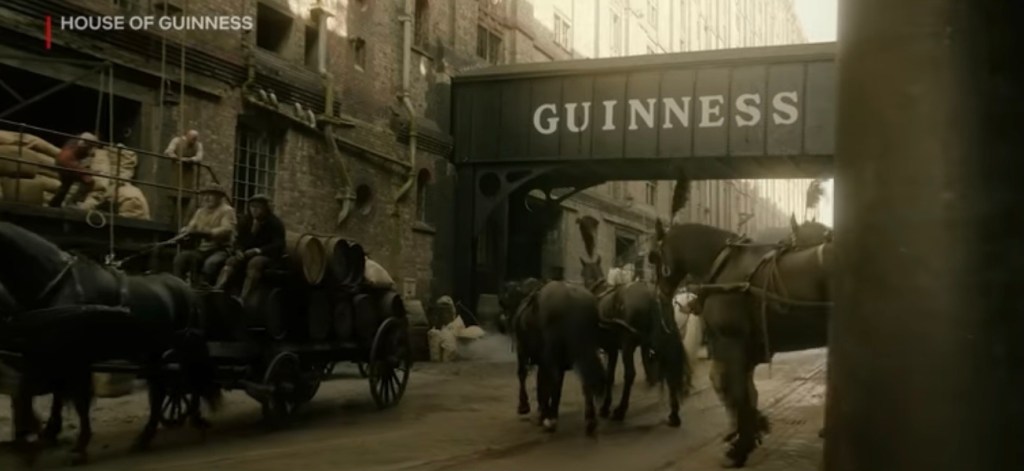
But as compelling as the setup is, House of Guinness falters in several key areas. The first and most glaring issue is the setting itself. For a show that makes 1868 Dublin its stage, the city never truly comes alive as a character. Unlike Peaky Blinders, where the grit of Small Heath seemed to seep into every frame, House of Guinness feels like a series of elaborate sets. They are beautifully shot, Knight and his crew make full use of locations, staging, and costuming, but they rarely capture the pulse of a city on the edge. The Dublin of this series often feels painted on rather than lived in.
The second issue lies in the cast. While there are standout performances, James Norton brings a simmering intensity, Jack Gleeson surprises with nuance beyond his Game of Thrones infamy, Danielle Galligan offers aristocratic charisma, and Anthony Boyle is magnetic, the wider ensemble doesn’t match their energy. Peaky Blinders benefited from the gravitas of actors like Cillian Murphy, Sam Neill, and Tom Hardy. Here, the absence of a central, anchoring presence leaves the series feeling less weighty, less urgent. The talent pool is promising, but uneven.
Dialogue is another sticking point. Knight has always had a flair for theatrical gravitas, but here it often tips into heavy-handedness. Characters declaim rather than converse, lines sag under their own weight, and the intended intensity sometimes collapses into unintentional melodrama. Compounding this is the structure: the narrative skips across years at a time, making it difficult to track shifting allegiances, character motivations, or the logic of certain arcs. What should feel like a slow burn dynasty epic instead becomes a stop-start journey, leaving viewers scrambling to catch up rather than swept along.
And for Irish audiences, historical accuracy is a sore point. The portrayal of the Fenians, in particular, has raised eyebrows. Their treatment often veers toward caricature, reducing a complex movement to broad strokes that sit uncomfortably against Ireland’s real and raw history. For a series so steeped in national identity, these missteps are hard to ignore.
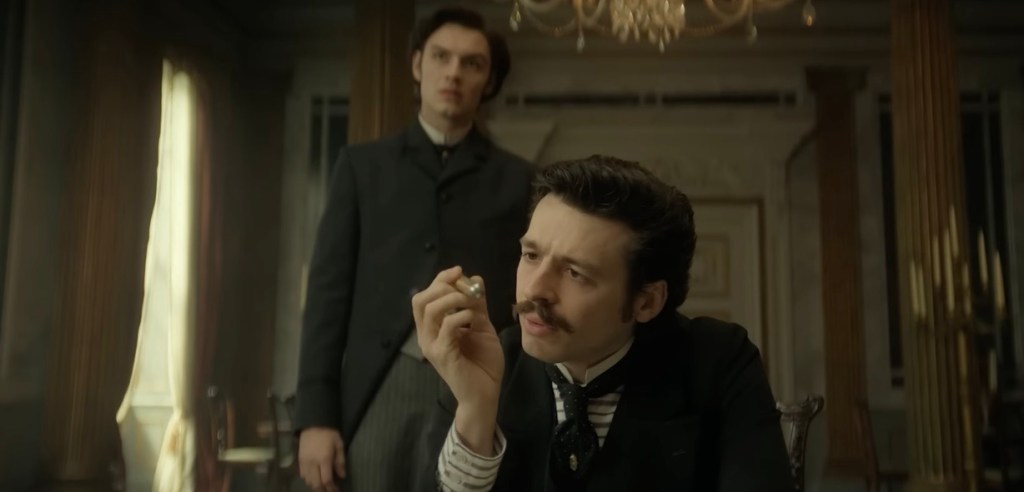
Yet, for all its flaws, House of Guinness isn’t without merit. It is gorgeously shot, every frame dripping with atmosphere. The production design and costuming are sumptuous, giving the show an undeniably cinematic sheen. Certain sequences, riot scenes, clandestine meetings, lavish brewery interiors, are as stylish as anything Knight has put to screen. The performances that do land, particularly from Norton and Boyle, are raw, captivating, and suggestive of what the series could be at its best. And while the narrative stumbles, it remains watchable, if only because the concept is so rich and the intrigue so built-in.
The season ends, frustratingly, on a cliffhanger, dangling threads that almost guarantee another instalment. It’s an ending that feels more like a contract than a conclusion, leaving audiences caught between anticipation and annoyance.
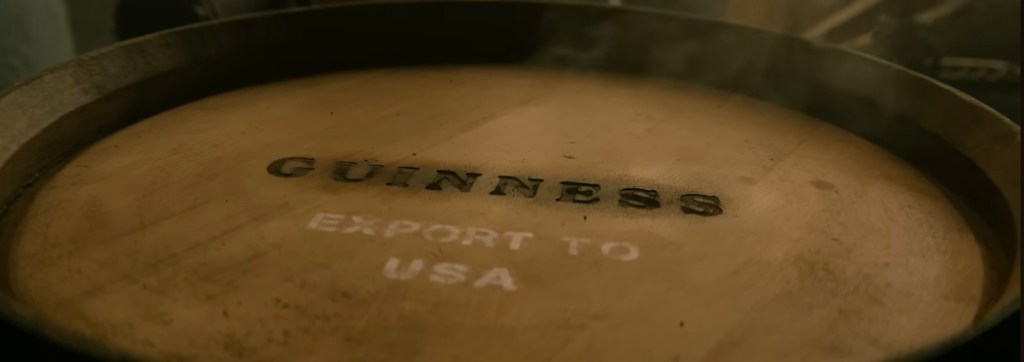
In the end, House of Guinness is a stylish pour that doesn’t quite go down as smoothly as it should. It looks the part, it has moments of flavour, but it lacks the fire, the danger, and the mythic weight that made Peaky Blinders unmissable. For Knight admirers, it’s a curious entry in his catalogue, watchable, occasionally compelling, but ultimately a little flat. A gorgeously shot but uneven historical drama, House of Guinness has atmosphere and ambition in spades, but stumbles in dialogue, depth, and dynamism. A promising start that never fully satisfies.
3 / 5 ✨ from the Screen Scribe.
(All images and videos are owned by and courtesy of Youtube / Netflix)

 The Screen Scribe
Leave a comment