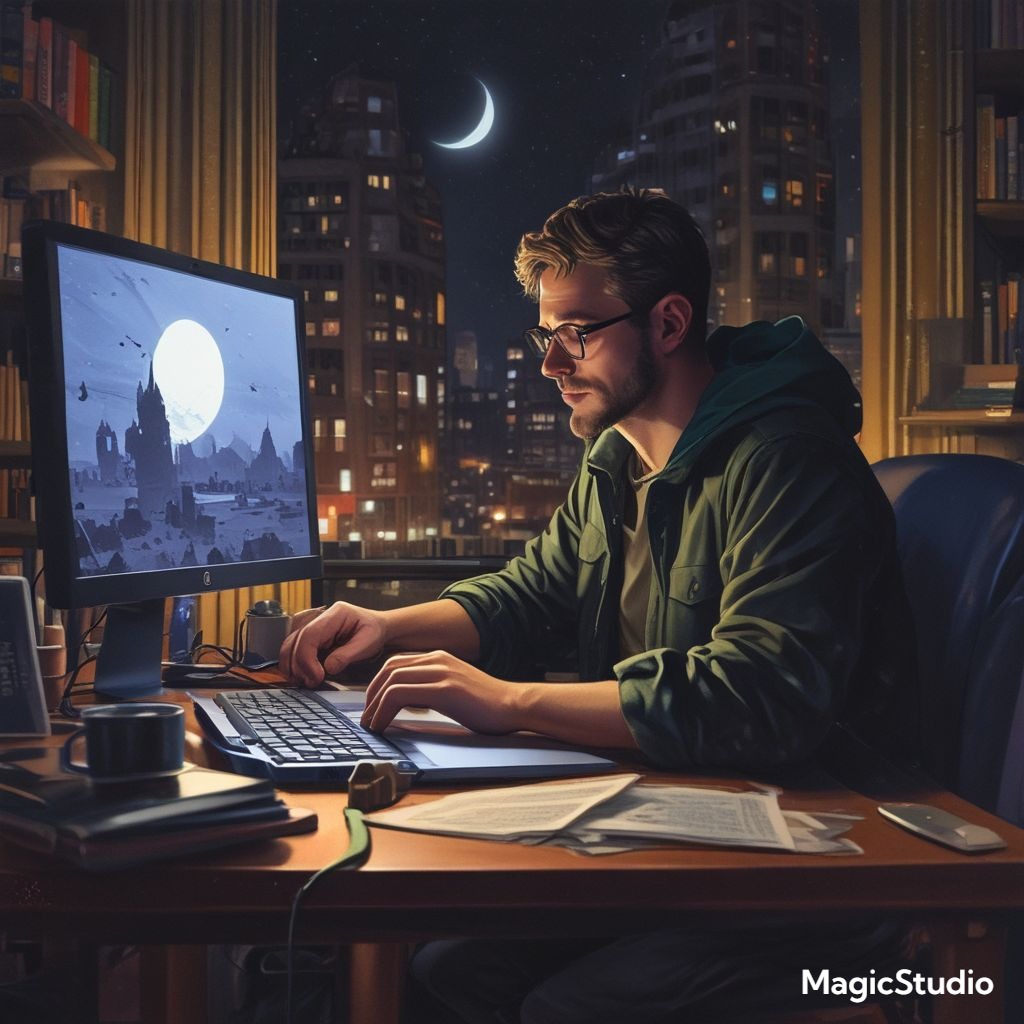
Before Hollywood was consumed by cinematic universes, billion-dollar tentpoles, and streaming algorithms, its most influential training ground wasn’t a film school or a studio backlot. It was a table scattered with dice, character sheets, and half-empty cans of Mountain Dew. Dungeons & Dragons, once mocked as the pastime of basement-dwelling eccentrics, has quietly revealed itself as one of the great incubators of modern storytelling, and the evidence is everywhere.
The list of creators who cut their teeth on D&D reads like a who’s who of contemporary entertainment. The Duffer Brothers built Stranger Things on the backbone of their old campaigns, even pulling Vecna straight from the Monster Manual into mainstream consciousness. Dan Harmon, creator of Community and Rick and Morty, has openly described D&D as his narrative playground, the place where he learned to balance absurd comedy with genuine emotional stakes. Taika Waititi and Jon Favreau, famous alums of Marvel and Star Wars, have admitted the improvisational energy of the game influenced their approach to storytelling, while actors like Joe Manganiello and Deborah Ann Woll are among the many Hollywood figures keeping the tabletop torch burning.
But the influence goes deeper than just a roll call of names. What D&D instilled in these minds was a toolkit, a way of thinking about stories not as rigid scripts, but as living worlds. Campaigns teach you how to balance sprawling arcs with intimate character beats. They train you to build tension not through spectacle, but through uncertainty. A single dice roll can shatter the most carefully laid plan, forcing players (and, by extension, future filmmakers) to embrace the unexpected. In cinematic terms, that translates to stories that breathe, twist, and carry the pulse of surprise.

Look at how this DNA manifests in the stories we watch today. Guardians of the Galaxy feels like nothing less than a D&D party hurled into space: the rogue with a smart mouth, the brooding warrior, the empath, the sentient “pet.” The Mandalorian unfolds like a classic campaign, each episode a side quest with the occasional boss battle, while the larger arc, Din Djarin’s relationship with Grogu, anchors the narrative like a DM’s long game. Even when Hollywood adapts D&D directly, as with Honor Among Thieves, the film’s most resonant beats aren’t about dragons or magical loot. They’re about the ragtag group of adventurers, flawed and funny, trying to save each other as much as the world.
And then there is Critical Role, the juggernaut that proved just how far tabletop storytelling could travel. What started as a group of voice actors livestreaming their home campaign grew into The Legend of Vox Machina, an animated series that turned Kickstarter history and now thrives on streaming platforms. It is more than an adaptation. It is a validation. Proof that the improvisational chaos of a dice roll can be refined into sharp, serialized storytelling without losing its soul.
Vox Machina carries the messy charm of a home game while delivering arcs that rival prestige television, balancing bawdy humor with genuine emotional weight, and quite frankly, is far superior than any fantasy show currently on any streaming platform (yes I’m looking at you Rings of Power, and I see you hiding in the corner The Witcher). In doing so, it transformed Critical Role from a niche curiosity into a sprawling creative studio, showing the world that the narrative power of Dungeons and Dragons does not just shape future filmmakers. It can stand toe to toe with them.
This is why D&D’s influence matters. It trained storytellers to think beyond formula, to craft worlds with their own internal logic, and to let characters, not studio mandates, drive the narrative. In a medium often strangled by market research and risk aversion, the D&D ethos is almost rebellious. It says: let the story unfold. Let it be messy, unpredictable, and alive. Some arcs will fizzle, some experiments will fail. But that failure itself is creative. It teaches resilience. It teaches reinvention.
You can even argue that the tonal elasticity of modern film and television, the way genres bleed into each other so freely, is a byproduct of those gaming tables. In a single D&D campaign, comedy can sit right next to tragedy, horror can spike out of nowhere, and heartfelt drama can emerge from the most unlikely character. That mix has become the signature of many of today’s best-loved series and films.
Of course, this isn’t just about nostalgia. Right now, another generation is sitting at their own tables, pencils in hand, rolling dice and building worlds in basements, garages, and Discord servers. Their stories may never leave the tabletop, but some of them will, and when they do, they’ll carry the same lessons their predecessors learned: that imagination is boundless, collaboration matters, and the most memorable tales come not from perfection, but from the unpredictable paths taken together.
Hollywood has plenty of problems these days: franchise fatigue, creative risk-aversion, and an obsession with algorithms that predict what audiences supposedly want. Perhaps the answer to all of that is already here, being played out in the margins of character sheets and maps.
Dungeons & Dragons gave an entire generation of filmmakers the courage to dream weird, sprawling, heartfelt stories. It reminded them that heroes don’t always win, villains aren’t always simple, and sometimes the most powerful moment is the quiet conversation around a campfire before the next battle. The best part? The dice are still rolling, and the next great cinematic saga may already be in progress, happening in some forgotten garage, on a Tuesday night, between a bard and a dragon.
(All images and videos are owned by and courtesy of Youtube)

 The Screen Scribe
Leave a comment