
Once upon a time, Netflix stood on the edge of the Continent with a sword in one hand and destiny in the other. They had Andrzej Sapkowski’s books, a legion of gamers still intoxicated from CD Projekt Red’s The Witcher 3, and the dream casting of Henry Cavill as Geralt of Rivia. It was their would-be Game of Thrones, the show that could slay dragons, conquer subscriber charts, and prove that streaming could birth a franchise mythos to rival cinema. And for a brief, flickering moment, it worked.
But as any bard could tell you, the tale of Netflix’s Witcher franchise is not one of triumph, but of hubris, folly, and the kind of short-sighted greed that leaves kingdoms in ruin. What should have been their crown jewel instead became a textbook case of how to burn through fan goodwill with astonishing speed, until the only thing left was a smoking crater, a recast Geralt, and the bitter laughter of viewers who once believed.
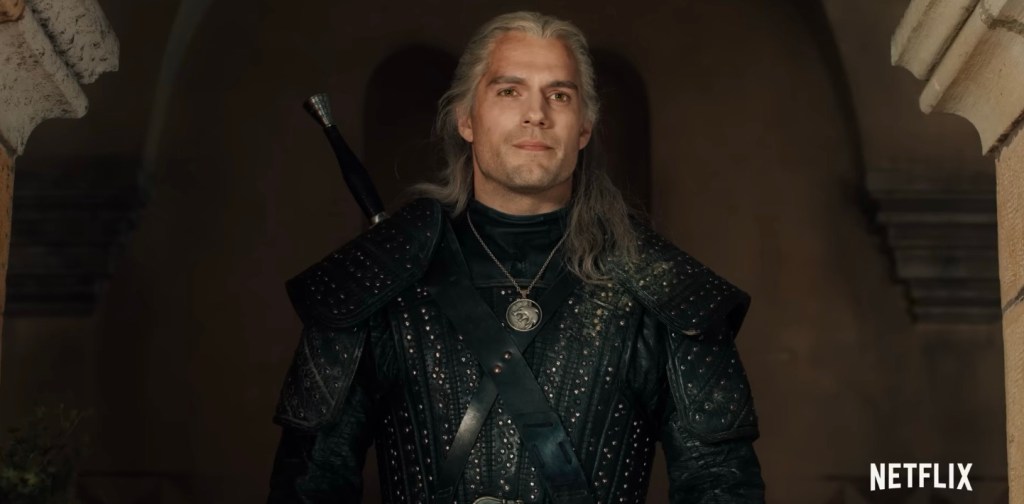
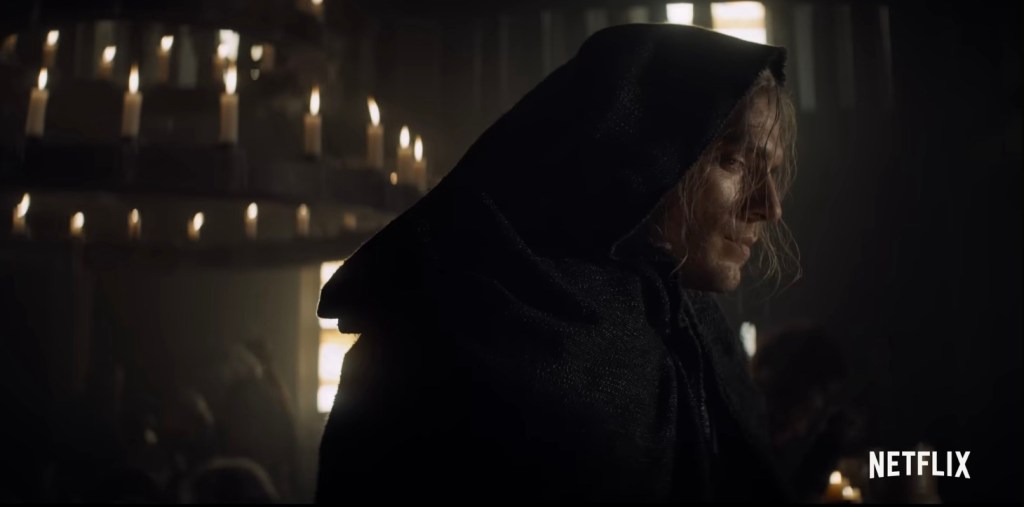
Henry Cavill’s Geralt wasn’t just good casting, it was mythic. Fans who’d dreamed of a live-action Witcher saw their wish fulfilled with a man who not only looked the part but lived it. Cavill wasn’t simply acting; he was carrying Sapkowski’s lore in his veins. He fought for accuracy, for respect of the text, for dialogue and detail that honoured what came before.
Season 1 had flaws, no doubt, the fractured timeline confused casuals, the budget sometimes showed its seams, and the writing occasionally stumbled, but it also had ambition. It wanted to weave folklore into dark fantasy, to set up a grand destiny of child surprise and continent-shaking wars. The music soared, the monsters chilled, and Cavill carried the entire show like Atlas with a sword on his back. For a moment, Netflix had their epic.
But cracks soon spidered across the steel. It wasn’t long before whispers leaked from the keep: writers mocking the source material, deriding the very lore that had birthed their show. Fans noticed. The tonal balance between fairy tale melancholy and monster-hunting grit wobbled. Subplots bloated the narrative. Yennefer’s arc strayed into invention for invention’s sake. Ciri’s journey felt less like prophecy and more like committee notes.

Instead of deepening Sapkowski’s folklore-soaked world, the series often drowned it in invented storylines, missing what made the books sharp: the moral ambiguity, the Slavic melancholy, the folkloric bite. What began as nitpicking from fans hardened into dread. The White Wolf was in peril, not from striga or kikimora, but from the people wielding the pen.
And then came the spin-offs. On paper, it made sense. Netflix wanted a franchise, a “Witcherverse.” After all, Disney had Marvel, HBO had Westeros, why shouldn’t the Continent sprawl across mediums? But where those universes earned expansion, Netflix skipped straight to saturation.
Nightmare of the Wolf, the animated Vesemir prequel, was stylish and serviceable. Not bad. Not necessary. The kind of “fine” that would be praised if there was a strong foundation beneath it. But there wasn’t.
Then Blood Origin arrived, and with it, disaster. A four-episode prequel meant to show the Conjunction of the Spheres turned out incoherent, rushed, and almost universally panned. A franchise-killer disguised as content. Fans who had given Season 2 the benefit of the doubt now saw confirmation: Netflix wasn’t interested in Sapkowski’s mythos, only in strip-mining it.
Even Sirens of the Deep, an animated offering adapting Sapkowski’s “A Little Sacrifice,” felt too little, too late. A band-aid on a body already buried. The irony is sharp. While Marvel patiently built its universe one stone at a time, Netflix wanted to leap straight into Phase Four theatrics without laying down Phase One. What they ended up with wasn’t a cinematic universe. It was a narrative graveyard.
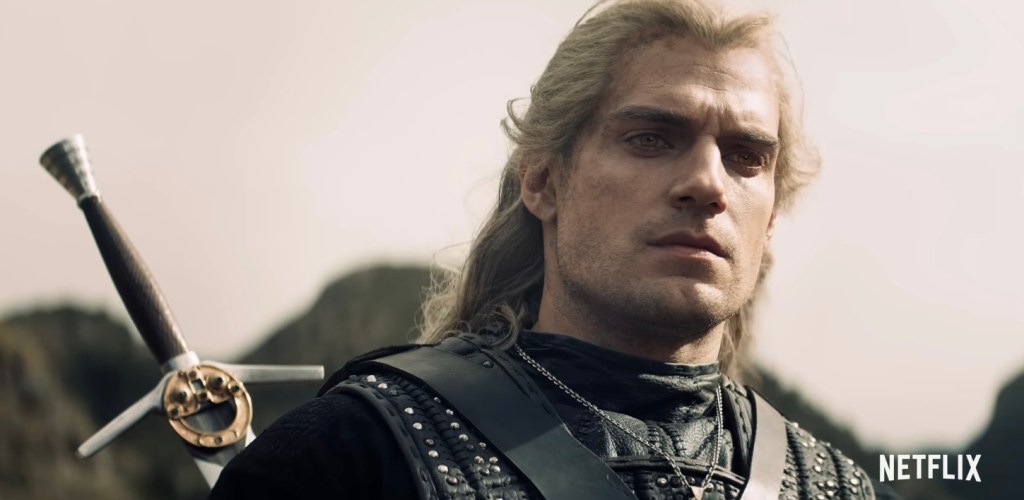
The death blow came with Cavill’s departure. When the news broke that the White Wolf himself was leaving after Season 3, citing “creative differences,” fans didn’t need runes to decipher the truth. Cavill had fought for the books. The showrunners hadn’t. Netflix tried to spin it with hollow justifications. They talked of scheduling, of the torch passing to Liam Hemsworth, of continuity. But the damage was irreversible. Cavill wasn’t just Geralt, he was the show. The fandom revolted, trust shattered. Season 3 doubled down on spectacle, but it had no heart left. The swords clanged, the magic flashed, but the soul was gone.
When Netflix announced Hemsworth’s recast, it wasn’t excitement that filled the Continent. It was resignation. The White Wolf had been slain, not by monsters, but by boardroom politics. The tragedy of The Witcher is that it could have been magnificent. Sapkowski’s stories are rich with ambiguity, folklore, and the bittersweet melancholy of choices without easy answers. CD Projekt Red understood this, The Witcher 3: Wild Hunt remains one of the most beloved games of all time precisely because it respected the heart of the text while expanding it with reverence.
Netflix, by contrast, treated the property as IP first, story second. Their model, binge, burn, replace, was never built for the slow, patient cultivation a mythos requires. Instead of building trust and cohesion, they chased the algorithm, and the algorithm demands content. Not story. Not lore. Just content.
The result? A fractured franchise that never had the chance to breathe, let alone flourish.

The Witcher’s rise and fall isn’t just a Netflix failure, it’s an industry parable. In the rush to replicate Marvel’s interconnected universe or HBO’s prestige epic, studios forget the most basic rule: universes are earned, not demanded. Stories have to matter before spin-offs can thrive. Characters have to resonate before franchises can multiply.
Like Zack Snyder’s DCEU, Netflix’s Witcher proves what happens when executives mistake IP for cash cows. You can’t conjure a franchise with boardroom spells and quarterly projections. You have to start with story. With respect. With heart. In the end, The Witcher on Netflix didn’t fall to monsters, sorcery, or wild hunts. It fell to hubris. To writers who sneered at their own source. To executives who saw dollar signs where there should have been destiny. To spin-offs that no one asked for. They had the White Wolf. They had the magic. They had the fanbase. And they let it slip through their fingers. Because in the end, Netflix’s Witcher wasn’t slain by beasts or curses. It was slain by the hubris of the modern media engine.
(All images and videos are owned by and courtesy of Youtube / Netflix)

 The Screen Scribe
Leave a comment