Some war films focus on sweeping battles, others on the politics that fuel them. The Hurt Locker, directed by Kathryn Bigelow, zooms in on something far more intimate: the psychology of the soldier. Released in 2008 and set during the Iraq War, it follows a U.S. Army bomb disposal unit as they face the daily, nerve-shattering reality of dismantling improvised explosive devices. But what begins as a tense depiction of combat quickly evolves into a meditation on the dangerous allure of war itself.
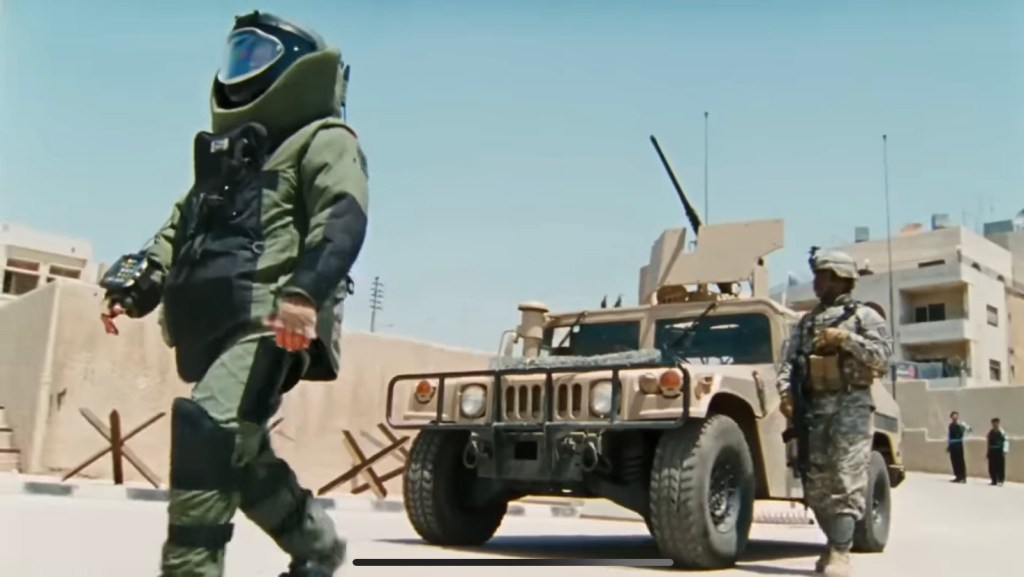
The film introduces us to Sergeant J.T. Sanborn (Anthony Mackie) and Specialist Owen Eldridge (Brian Geraghty), two members of an Explosive Ordnance Disposal (EOD) team. When their leader is killed in action, they are assigned a new team leader: Staff Sergeant William James, played with raw intensity by Jeremy Renner. James is a cowboy, reckless, confident, seemingly fearless, and his approach to defusing bombs terrifies his cautious teammates. Over time, it becomes clear that James isn’t just good at his job. He’s addicted to it. The adrenaline, the danger, the razor-thin line between life and death, it’s the only place where he feels truly alive.
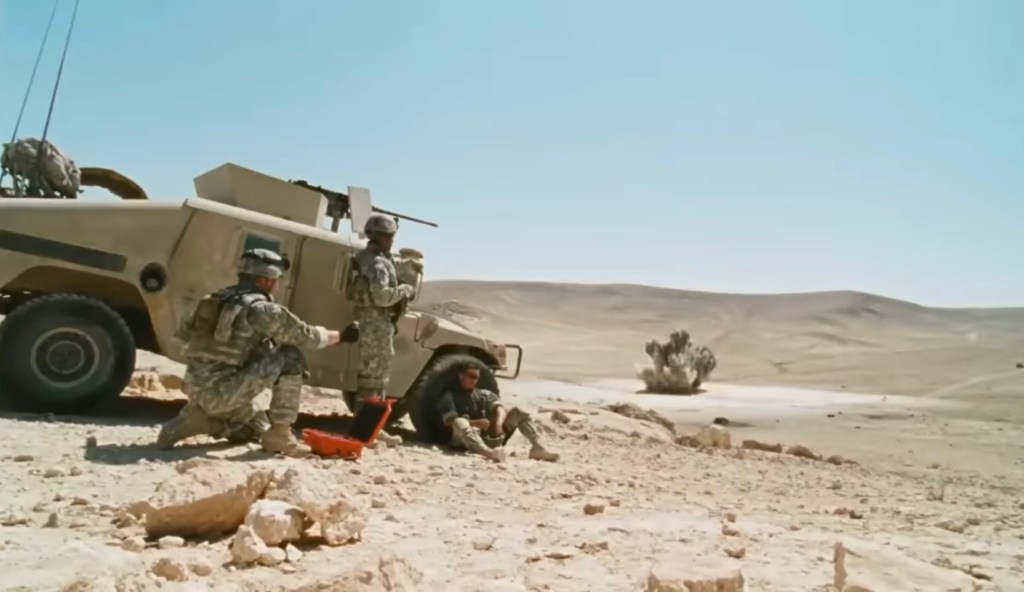
What makes The Hurt Locker so gripping is its relentless tension. Bigelow stages each bomb disposal sequence with surgical precision, turning even the quietest moments into edge-of-your-seat suspense. A man walks casually with a cellphone. Is he a civilian? Or is he about to trigger an explosion? A car sits abandoned in the desert. Is it empty? Or is it wired to kill? These scenes are masterclasses in sustained anxiety, leaving the audience as taut as the wires James cuts.
Yet the film isn’t just about danger, it’s about what that danger does to people. Renner’s performance captures the paradox of a man who thrives in chaos but struggles in normal life. In one of the film’s most famous scenes, James returns home and stands in a grocery store aisle, overwhelmed by the sheer banality of everyday choices. After everything he’s seen, nothing compares to the intensity of war. It’s a moment that drives home the central thesis: for some soldiers, combat isn’t just a duty, it becomes a compulsion.
The supporting cast helps highlight this tension. Mackie’s Sanborn is disciplined and by-the-book, increasingly frustrated by James’ recklessness, while Geraghty’s Eldridge embodies the raw fear of a young soldier in over his head. Together, they form a fragile unit constantly tested by the volatility of both their mission and their leader.
Shot on location in Jordan, the film’s gritty, handheld camerawork lends authenticity. The heat, the dust, the sudden violence, it all feels immediate and unpolished, as if we’re embedded with the unit ourselves. Mark Boal’s script, informed by his time as a journalist in Iraq, avoids grand speeches and moralising. Instead, it presents the war in fragments, chaotic, unpredictable, and deeply personal.

When it won Best Picture at the Academy Awards, The Hurt Locker became the first war film about the Iraq conflict to be so widely recognised, and Bigelow became the first woman to win Best Director. The acclaim was well deserved, not because the film romanticises war, but because it dares to suggest that war has its own dark seduction. As part of our Military Month collection, The Hurt Locker is the entry that lingers. It doesn’t glorify combat or celebrate victory. Instead, it stares unflinchingly at the cost of being good at war, and the unsettling truth that, for some, walking away is the hardest battle of all.
(All images and videos are owned by and courtesy of Youtube)

 The Screen Scribe
Leave a comment