
Few films have reshaped the way we think about war on screen the way Steven Spielberg’s Saving Private Ryan did in 1998. Before its release, World War II had often been depicted with a certain Hollywood gloss, heroic charges, stirring speeches, clear-cut good and evil. Spielberg stripped all that away. What he delivered instead was visceral, unrelenting, and unforgettable. It remains one of the most influential war films ever made, and essential viewing during Military Month.

The film opens with perhaps the most harrowing twenty minutes in cinema: the D-Day landings on Omaha Beach. Spielberg plunges us directly into the chaos, the handheld cameras shaking with every explosion, the sound design overwhelming, the violence graphic and unflinching. Limbs are torn away, soldiers scream for medics, bullets tear through water and flesh alike. It is not spectacle, it is survival. That opening sequence alone changed how war could be portrayed, making previous depictions seem almost quaint by comparison.
But Saving Private Ryan isn’t just about its famous opening. At its heart, the story is simple, almost mythic. After the battle, Captain John Miller (Tom Hanks) and his squad are tasked with a morally complex mission: find and bring home Private James Ryan (Matt Damon), whose three brothers have all been killed in combat. The mission is as much about symbolism as strategy, raising questions about sacrifice, duty, and the worth of one man’s life against the lives of many.
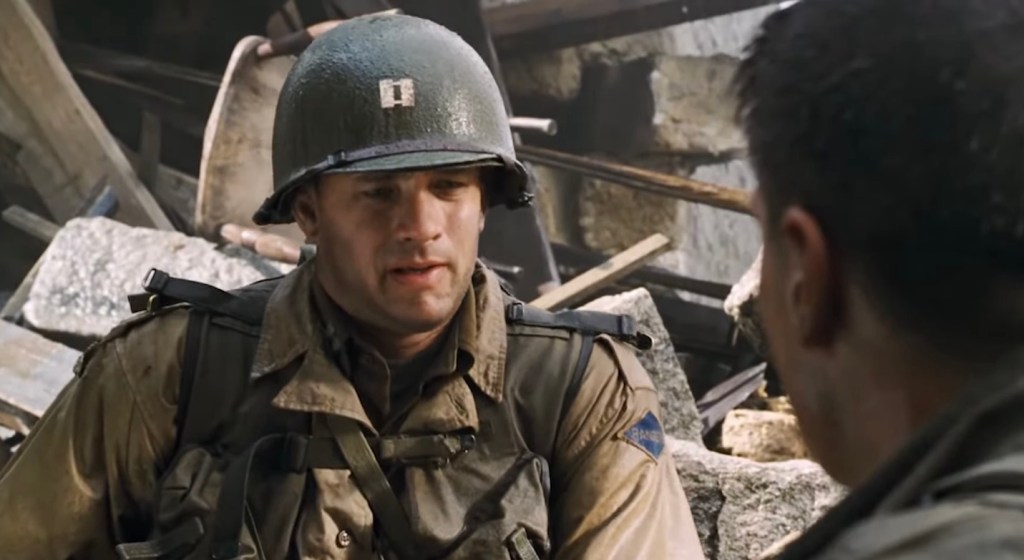
The strength of the film lies in its balance between intimate character work and epic scope. Hanks delivers one of his finest performances as Miller, a schoolteacher turned reluctant soldier who embodies both quiet humanity and quiet despair. The supporting cast, including Tom Sizemore, Edward Burns, Giovanni Ribisi, Barry Pepper, and a young Vin Diesel, create a believable, weary squad whose banter and bonds feel authentic. Each character brings their own fears and philosophies to the mission, making the moral debates feel lived-in rather than scripted.
Spielberg’s direction, combined with Janusz Kamiński’s stark cinematography, keeps the film grounded in realism. The washed-out colours and handheld shooting style create the impression of a documentary, while John Williams’ restrained score avoids bombast, letting the images speak for themselves. When the music swells, it does so with mournful weight rather than triumph, underscoring the tragedy rather than celebrating victory.
What makes Saving Private Ryan endure is its refusal to sentimentalise. For every moment of bravery, there is brutality; for every act of sacrifice, there is loss. The mission itself becomes a meditation on the randomness of survival, the futility of trying to find meaning in war, and the burden carried by those who make it home. By the time Miller tells Ryan to “earn this,” the weight of the entire film crystallises into one unforgettable line, both a plea and a demand.
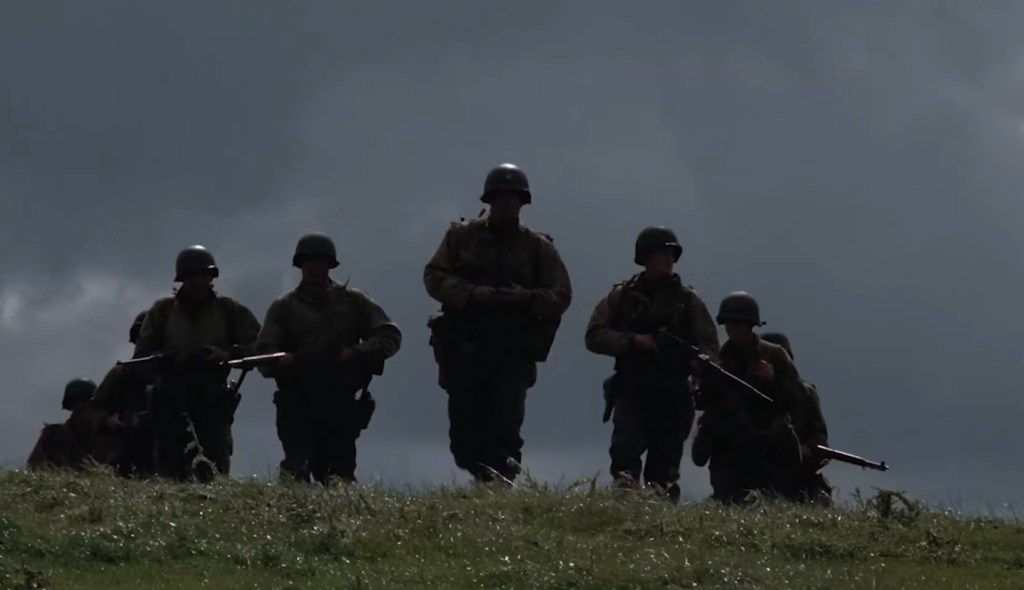
When it was released, the film was hailed as a masterpiece, winning five Academy Awards and influencing an entire generation of filmmakers and video games alike (Band of Brothers and Call of Duty owe it a huge debt). But its true legacy is not in awards or imitators. It is in the way it continues to confront audiences with the unvarnished truth: war is chaos, war is sacrifice, and war leaves scars that never fully heal. To round out our Military Month collection, Saving Private Ryan stands as the definitive World War II recommendation. It is not an easy watch, but it is an essential one, a film that forces us to remember the cost of freedom, not in abstract, but in blood, fear, and the faces of men who gave everything.
(All images and videos owned by and courtesy of Youtube)

 The Screen Scribe
Leave a comment