
There is a recurring flaw in modern film discourse. Audiences talk about films based on source material as if they all belong to one tidy category. Everything is an adaptation. Everything succeeds or fails based on accuracy. Everything must be judged against a text that supposedly carries definitive authority. This is a misunderstanding born out of habit rather than insight. The majority of films based on existing works are not adaptations. They are interpretations. They behave differently, they aim differently and they must be judged differently. Confusing the two leads to sloppy discourse and misplaced outrage, and it blinds people to what the work is trying to do.
Adaptation theory makes the distinction clear. A genuine adaptation preserves the thematic purpose and narrative architecture of the original text. Not every detail, not every subplot, but the meaning. The moral logic. The worldview. The internal devices that make the text what it is. Adaptation is translation, not reinvention. It requires the filmmaker to treat the original author as the primary creative authority. This is rare in modern cinema, which prefers to consume material rather than serve it.

Case Study 1: The Lord of the Rings as Adaptation
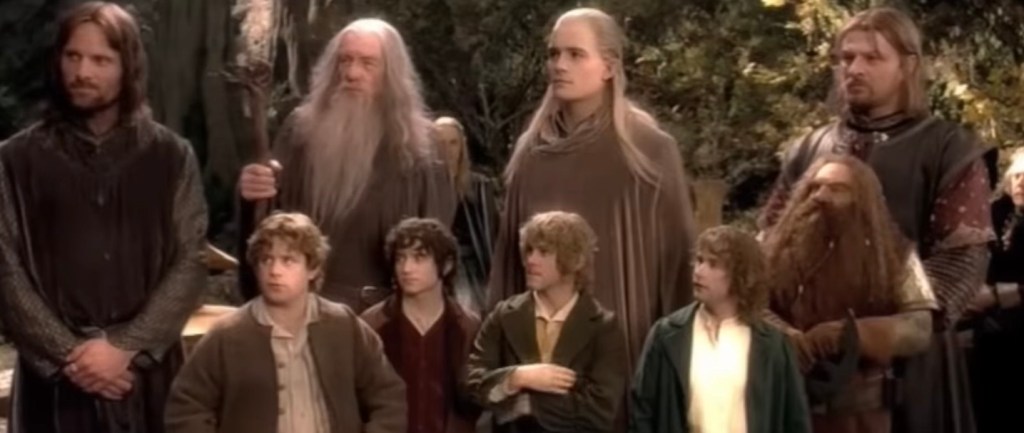
If you want to see what genuine adaptation looks like in film, you go to The Lord of the Rings. Not because it is perfect. Not because it is wholly faithful. It is neither. You go to it because it recognises the fundamental rule of adaptation theory. The text dictates the meaning. The film translates that meaning into a new medium without altering its philosophical core.
Tolkien’s work is not simply plot driven fantasy. It is built on a metaphysical construction shaped by Catholic ethics, northern European mythology and a deep suspicion of power. The world is designed around the tension between decay and endurance, the quiet dignity of the humble and the corrosive nature of domination. To adapt Tolkien, you must preserve that metaphysical architecture. If you lose the worldview, you lose the book, even if every scene remains intact.
Jackson and his writing team understood this. They made alterations, but every alteration protects or clarifies the underlying thematic engine. Removing Bombadil protects pacing, but does not disturb Tolkien’s moral universe. Rebalancing Arwen shifts screen presence, but does not rewrite the meaning of love or lineage within the text. Changing the tone of Faramir’s encounter with Frodo avoids redundancy and maintains momentum without destroying Faramir’s philosophical integrity. The world feels like Tolkien because the ethical scaffolding remains intact.
This is adaptation. It is not a one to one translation. It is fidelity of meaning. Jackson never rewrites the purpose of the journey, the moral weight of the Ring, the role of Fellowship or the sacrificial logic that shapes the third act. He never recasts the world in his own ideology. He serves the text instead of interpreting it. The creative liberties operate within Tolkien’s value system, not outside it. The films are not reinterpretations. They are translations. They behave like cinema but think like Tolkien.
This level of fidelity is rare because it requires discipline. It demands that the filmmaker suppress the temptation to modernise, politicise or deconstruct unless the text itself invites it. Most contemporary “adaptations” betray their source narratives by accident or by ego. Jackson’s trilogy succeeds because it understands a deceptively simple principle. If you adapt, you adapt the world as much as the story. Change the world and you are no longer adapting. You are interpreting.
The Lord of the Rings remains one of the clearest demonstrations of what adaptation actually involves. It is not accuracy. It is not reverence. It is the preservation of narrative logic and thematic intention across mediums. The films stand on their own as masterpieces because they understand that Tolkien is the author and the filmmaker is the translator. Once you recognise how rare this dynamic is, you start seeing why almost every other franchise labelled as an adaptation fails to meet this standard. They are trying to adapt without doing the fundamental work of preserving meaning.
Interpretation is the inverse. Interpretation does not translate the text. It interrogates it. It pulls apart symbols, shifts themes, reconstructs roles and asks what the story means today rather than what it meant to its original audience. Interpretation turns literature into conversation. It thrives on change. It creates new meaning out of inherited material. This is why reinterpretations resonate with contemporary viewers. They speak to cultural anxieties the original work could not have anticipated.
But this is also where the discourse breaks down. Viewers often critique interpretive films using adaptation criteria. They demand fidelity from a work that is not attempting fidelity. They cry betrayal when the work is not attempting preservation. The error is not in the film. It is in the classification. You cannot criticise a painting for failing to behave like a photograph.
Case Study 2: Captain America: Civil War as Interpretation, not Adaptation.
If you want a perfect demonstration of the difference between adaptation and interpretation, you do not need to look any further than Civil War. Not the film. The comic. The original 2006 crossover event is one of the most legally, politically and morally explicit storylines Marvel has ever produced. It begins with the Stamford disaster. Over six hundred civilians die after a reality show stunt goes catastrophically wrong. Public tolerance collapses. The United States government passes the Superhuman Registration Act. Every powered individual or costumed identity must register with the state, surrender their secret identity and become legally bound government agents. Failure to comply is a federal crime.
This is not a thematic backdrop. It is the entire narrative engine. Civil War is built on the tension between liberty and state control, the ethics of power, and the moral legitimacy of extra-legal heroism. Tony Stark’s support for the Act reflects a fear that unrestricted heroes will be legislated out of existence altogether. Captain America rejects the Act because it violates the principle that heroes serve the public, not the state. Their conflict is ideological, legal and grounded in the consequences of the Stamford deaths.
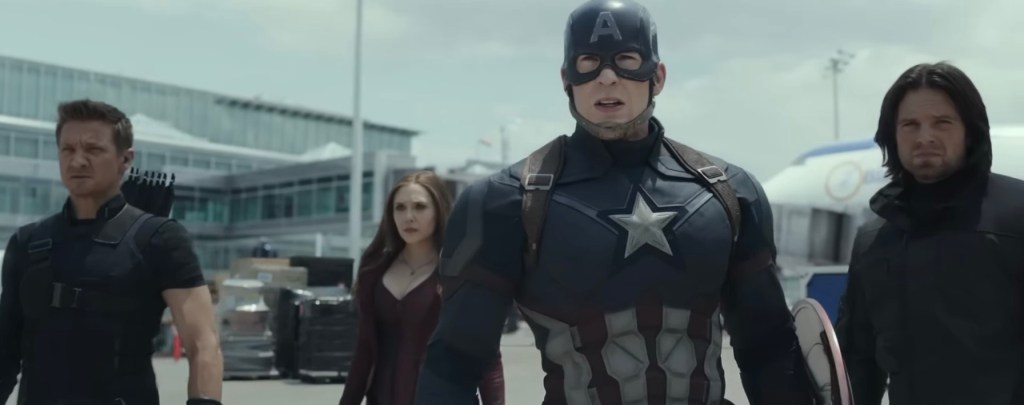
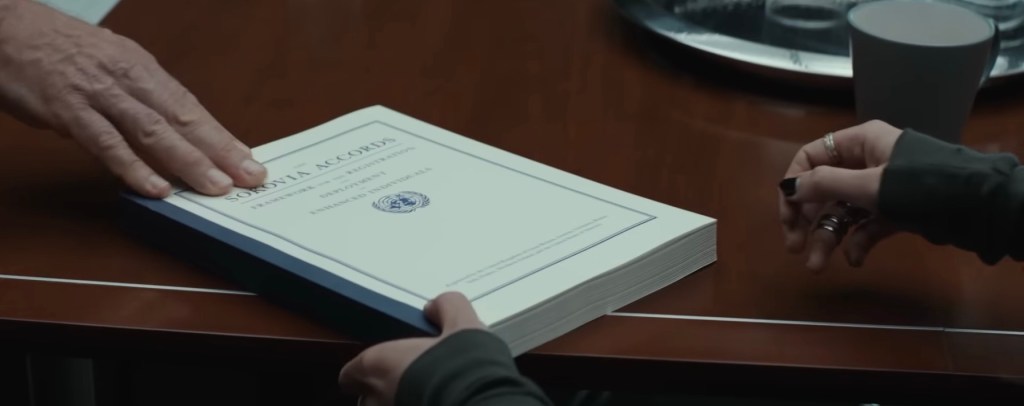
Captain America: Civil War is not an adaptation of this. It borrows the silhouette and discards everything that gives the comic its identity. The Sokovia Accords do not register heroes as weapons, but instead create consequences and accountability for superhero operations by proposing UN oversight of Avengers operations. This becomes the central conflict that creates the idealogical rift between Steve and Tony, while Bucky Barnes’ narrative from Winter Soldier perfectly dovetails into this, deepening the growing personal conflict between the two leading Avengers. This shifts the conflict from governance in the early to mid film, to an exploration of grief through the lens of the repurcussions of the Avengers international actions. The film is not interrogating state power, but rather it dissects the collapse of a found family and explores grief and revenge in a world of superheroic titans.
This is interpretation. It extracts emotional and political essence and discards the more overt comic book architecture prevalent in the Civil War comic. It rewrites a sociopolitical drama into a story about fractured loyalty. It cannot adapt Civil War because the MCU does not have the continuity required to support that narrative. It must reinterpret it to fit its own emotional logic. The film is not a failure of accuracy. It is a different category of work entirely.
Recognising this difference is not pedantic. It is foundational. Adaptation preserves meaning. Interpretation transforms meaning. One serves the text. The other responds to it. When audiences fail to identify which category a film belongs to, they use the wrong criteria to judge it. They blame a work for not being something it never attempted to be.
Cinema is not inherently an adaptive medium. It is an interpretive one. It consumes myth, shifts symbols, reframes narratives and shapes stories to the anxieties of the moment. The sooner viewers learn to distinguish between adaptation and interpretation, the sooner discourse will rise above empty accusations of betrayal and reach a level that actually respects the complexity of storytelling across mediums. The question is never whether the film is faithful. The real question is simple. What is the film trying to be. And did it succeed on those terms alone.
(All images are owned by and courtesy of Youtube)

 The Screen Scribe
Leave a comment