Jason Statham has reached an interesting phase in his career. At this point, you know exactly what you are getting, but you also know that it can swing wildly in quality. In the past few years alone he has delivered the surprisingly enjoyable The Beekeeper, followed by the far blander A Working Man. So going into Shelter, apprehension felt entirely reasonable. This is mid-tier Statham territory, and that can either be a comforting old jacket or an aggressively forgettable shrug. Thankfully, Shelter lands closer to the former, even if it never threatens to be anything more than a solid, modest action thriller.
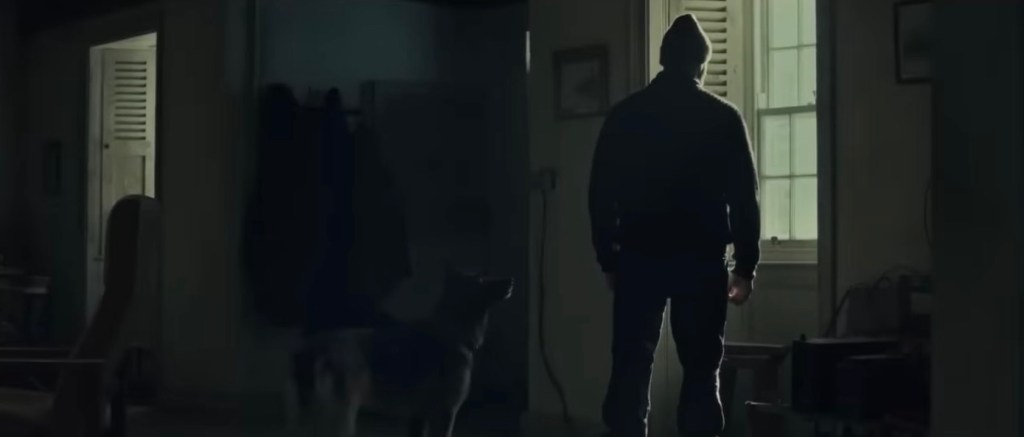
The setup is pure Statham. Michael Mason is a former government asset, part marine, part assassin, now living in isolation on a remote Scottish island. Gruff, withdrawn, and hiding from a past he would rather forget, Mason is dragged back into violence after rescuing a young girl caught in the middle of a much larger mess. It is a framework we have seen countless times, not just from Statham, but from the genre as a whole. The reluctant protector. The child in danger. The shadowy government forces closing in. None of this is new, and the film makes no attempt to pretend otherwise.

Where Shelter distinguishes itself is in its patience. Instead of rushing headlong into gunfire and body counts, the film allows itself time to slow down. Characters are given space to exist outside of plot mechanics. The relationship between Mason and Jessie is allowed to develop naturally, escalating from wary necessity to genuine emotional connection. This grounding is the film’s greatest strength. It gives weight to what would otherwise be a disposable action premise, and it makes the inevitable violence feel earned rather than obligatory.
That is not to say the film is without issues. The wider plot elements remain frustratingly underdeveloped. Political intrigue, shadowy handlers, and government conspiracies are introduced more as background noise than fully realised narrative threads. They function as excuses to push the story forward rather than ideas worth exploring in their own right. There is a sense that there was more story on the page than what ultimately made it to the screen.
The pacing also falters in the final act. After taking its time early on, the film suddenly rushes toward the finish line. The ending feels abrupt and slightly anti-climactic, resolving major threads with less care than they deserve. Another thirty minutes would have allowed the story to breathe properly and land with greater emotional impact. As it stands, the film closes just as it feels ready to deepen.

On the positive side, Statham remains a reliable presence. At fifty eight, he still moves with startling speed and precision. The action scenes are swift, brutal, and efficient, mirroring his screen persona perfectly. There is no unnecessary choreography or over edited chaos. When violence occurs, it is sharp and decisive. Statham has always excelled at this kind of physical storytelling, and Shelter plays to that strength wisely.
The emotional core of the film is surprisingly effective. The central relationship is tender without becoming saccharine, and it benefits enormously from the film’s restraint. Statham allows warmth to seep through the stoicism, reminding audiences why he has endured as a leading man. It is not a performance that demands awards attention, but it is quietly effective and well judged.
Visually, the film makes good use of its bleak coastal setting. The cold, isolated landscape reinforces the emotional distance Mason has built around himself. It also helps the film feel smaller and more intimate, which suits the story it is trying to tell. This is not a bombastic action spectacle. It is a contained character piece with occasional bursts of violence.

Ultimately, Shelter is not a reinvention of the genre, nor is it a late career classic for Statham. But it does something increasingly rare for modern action cinema. It slows down. It lets scenes play out. It trusts that character matters as much as carnage. In a cinematic landscape dominated by excess, that modest ambition is oddly welcome. A familiar but well-handled Statham thriller. Not a standout, but a solid, quietly effective way to spend a cold February evening at the cinema.
2.5 / 5 ✨ from the Screen Scribe.
(All images and videos owned by and courtesy of Youtube)

 The Screen Scribe
Leave a comment