
There was a time when comic book movies weren’t box office certainties. Before Iron Man built an empire and before Batman brooded under Nolan’s prestige lens, there was Constantine, a 2005 supernatural noir that quietly did something remarkable: it brought DC’s darkest antihero to the big screen in an era when superheroes still wore their underwear on the outside.
Created by Alan Moore, Steve Bissette, John Totleben, and Rick Veitch during their legendary Swamp Thing run, John Constantine debuted in 1985 as a trenchcoated, chain-smoking British occult detective with all the charm of a used car salesman and the moral compass of a broken roulette wheel. Hellblazer, his long-running Vertigo comic, was gritty urban horror at its finest, a meditation on guilt, addiction, politics, and the greyest shades of human nature, all filtered through a working-class Scouser conman who outsmarted demons as often as he damned himself.
So how did we get from there… to Keanu Reeves in a black suit and tie, battling CGI demons in Los Angeles?
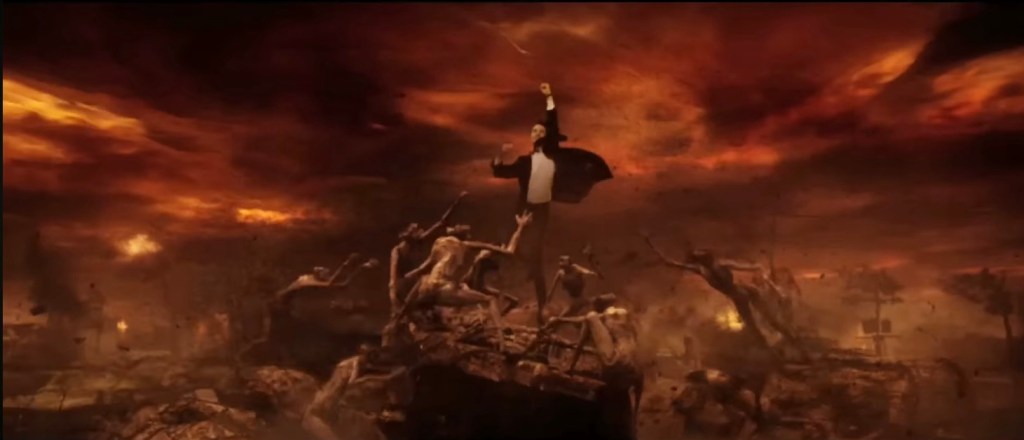
Directed by Francis Lawrence in his feature debut, Constantine is best viewed as a translation rather than an adaptation. Fans were outraged at the time, a Constantine with no blonde hair, no British accent, no London back alleys drenched in Thatcherite misery? But what Lawrence and Reeves understood was that Constantine isn’t defined by geography or even aesthetics. He’s defined by a worldview: cynical, fatalistic, burdened by his own sins, yet unable to stop himself from trying to save a world he no longer believes he belongs in.
Constantine takes the noir elements of Hellblazer, the existential dread, the moral ambiguity, the urban decay and reimagines them in a glossy, neon-lit LA underworld. It’s Catholic horror by way of Blade Runner, a film where angels are just as manipulative as demons, and humanity is left to scrape by in the sulphurous cracks between heaven and hell. Lawrence bathes the film in sickly greens and deep blacks, giving it a stylised otherworldliness rarely seen in comic book adaptations before or since.
Keanu Reeves’ portrayal remains divisive. Comic fans wanted a sardonic Scouser with a pint in one hand and a Silk Cut in the other; instead they got a weary, stoic exorcist with lung cancer and a perpetual thousand-yard stare. But rewatching Constantine today, his performance feels like a precursor to his later reinvention in John Wick: a man haunted by sins and grief, stripped of quips but radiating a tired nobility. He plays Constantine less like a trickster mage and more like a noir detective, broken, resigned, but driven to do what’s right even if salvation is forever out of reach.
And then there’s the supporting cast: Tilda Swinton’s ambiguous Gabriel, ethereal and coldly menacing; Peter Stormare’s white-suited Lucifer, dripping tar and giddy malice; Djimon Hounsou’s Papa Midnite, part club owner, part voodoo kingpin. Each actor leans fully into the gothic comic book realism, giving Constantine a mythic, almost operatic texture that transcends its sometimes-thin plot.
What Constantine did, perhaps without intending to, was prove that comic book movies could explore darkness without abandoning spectacle. It’s not the cartoonish gothic camp of Batman Forever, nor is it the bleak moral sermon of Batman Begins. Instead, it’s an occult noir, a supernatural detective story that believes in damnation as much as redemption. In that sense, it remains truer to the spirit of Hellblazer than many give it credit for.
Looking back, Constantine was ahead of its time. Long before Doctor Strange was opening portals with neon sigils, Constantine was banishing demons with Latin incantations and golden crucifix shotguns. Long before the MCU balanced world ending spectacle with endless quips, Constantine was quietly laying groundwork for darker, mature genre adaptations. Its cult status today feels deserved. It’s a film that dared to bridge comics and noir, faith and horror, pulp action and metaphysical dread, all without apologising for its bleak worldview.
Perhaps the truest testament to its legacy is this: Constantine remains one of DC’s most fascinating characters, yet his best live-action interpretation so far is still the one that angered comic fans the most. Because despite the American accent and the black hair, Reeves’ Constantine understood the one truth that defines Hellblazer’s haunted antihero:
He’s already damned. But he’s not about to let the rest of us go down without a fight.
(All images and videos are courtesy of Youtube and owned by Youtube creators)

 The Screen Scribe
Leave a comment