There is something primal about the roar of an engine at 200 miles per hour. It awakens the part of your soul that still believes in gladiators and heroes, that wants to watch humans conquer physics through sheer will and precision. F1, the new racing drama from the Top Gun: Maverick creative team, understands this instinct deeply. It does not reinvent the sports movie wheel, but it polishes it to a mirror shine and lets it scream down the track at full throttle. With Brad Pitt radiating weary, weathered charisma and Kerry Condon proving, once again, that she is one of Ireland’s finest acting exports, F1 is both a love letter to racing and an unapologetic piece of big screen entertainment. More of this, please, Hollywood.
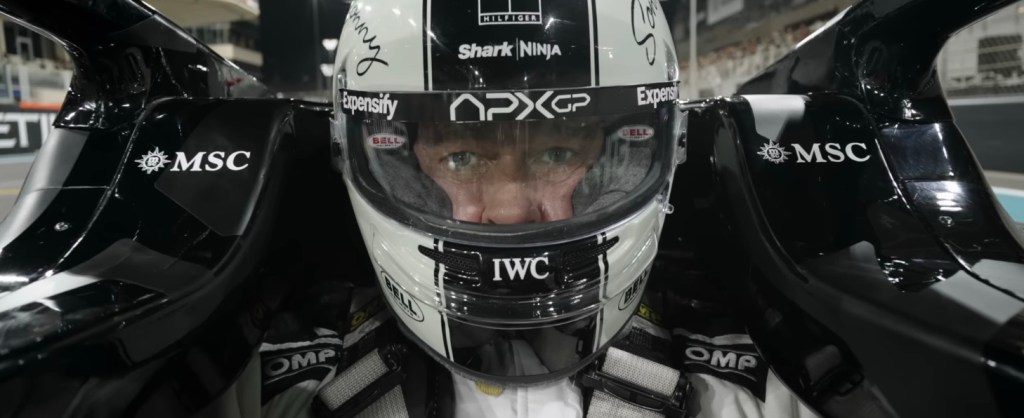
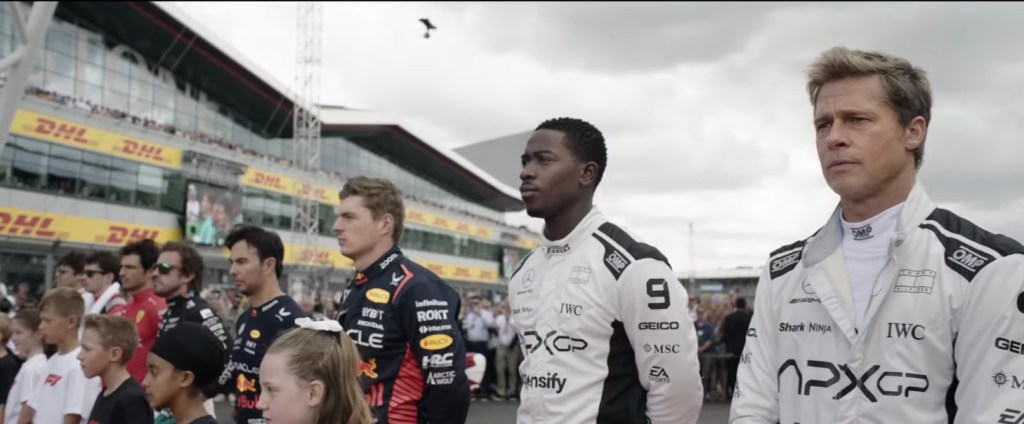
F1 follows the familiar contours of classic sports dramas but executes them with such confidence and emotional clarity that familiarity becomes a strength. Pitt plays Sonny Hayes, a once-great Formula 1 driver forced into early retirement after a brutal crash in Monaco left him with lingering injuries and a tarnished reputation. When a mid-tier team desperate for relevance recruits him as a mentor-driver for their cocky young ace, played by Damson Idris, Sonny seizes the chance to reclaim his legacy and prove that instinct, experience, and courage can still trump youthful bravado.
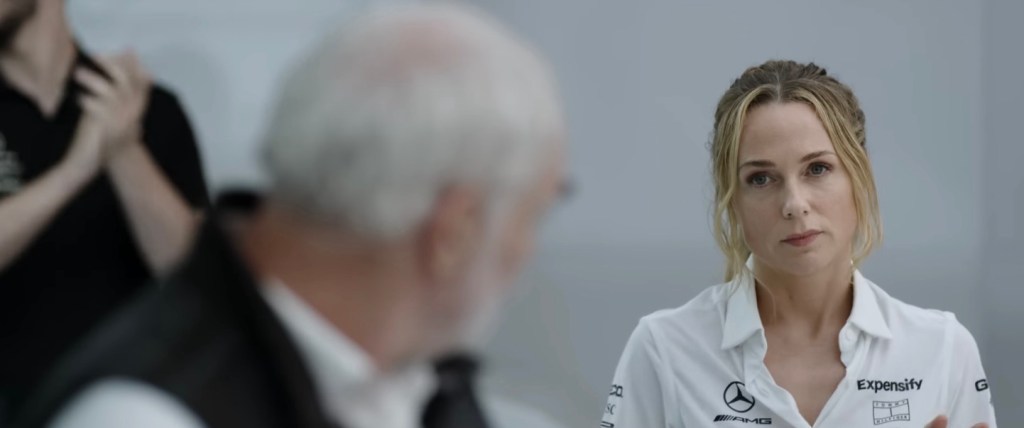
Kerry Condon plays the team’s operations director, an iron-willed strategist who refuses to let ego override safety or team cohesion. Her dynamic with Pitt forms the film’s emotional backbone: two people bruised by life’s failures but united by a fierce love of racing. Together, they must navigate corporate politics, media vultures, and the psychological toll of driving at speeds where death is always a mechanical failure away.
For all its roaring engines and tight emotional beats, F1 is not a flawless lap. The film clocks in at just over two and a half hours, and while it never becomes outright boring, its second act meanders with unnecessary subplots about boardroom scheming and sponsor politics. These scenes, though realistic, sap narrative momentum from what should be a lean, kinetic story about rivalry and redemption. Trim 20 to 30 minutes, and this becomes a near-perfect genre piece.
There is also the issue of predictability. If you have seen Rocky Balboa, Rush, or Creed, you know almost every emotional checkpoint before the car even leaves the pit lane. The film does not subvert these expectations so much as embrace them, which may frustrate viewers looking for a fresher take on the sports redemption arc.
Finally, while the cockpit cinematography is breathtaking, the editing occasionally prioritises style over clarity. A few race sequences rely on rapid cuts that undermine the spatial awareness crucial to capturing F1’s lethal beauty. This is a minor quibble, but with such top-tier production values elsewhere, it stands out.
But let us be clear: none of these flaws outweigh what F1 does so spectacularly well.
Brad Pitt delivers one of his finest late-career performances as Sonny Hayes. He plays the character with a rugged dignity, never descending into self-pity or melodrama. Hayes is weary but not broken, cocky but not arrogant, and Pitt nails every note with effortless magnetism. It is the kind of performance that makes you wonder why Hollywood does not write more roles for men in their sixties who still burn with intensity.
Kerry Condon is equally excellent. As a fellow Thurles native, it is impossible not to feel a swell of pride watching her match Pitt’s charisma beat for beat. She brings warmth, intelligence, and emotional precision to what could have been a generic team manager role. Her scenes with Pitt crackle with tension, respect, and unspoken affection, grounding the film’s bigger moments in lived-in human reality.
The supporting cast is strong across the board, with Damson Idris delivering a believably smug yet vulnerable young rival. But the film’s true star is its commitment to racing authenticity. Joseph Kosinski directs each sequence with a visceral clarity that makes you feel the g-forces in your chest. The cockpit POV shots, practical track footage, and immersive sound design combine to create some of the most thrilling race sequences put to film since Ron Howard’s Rush.
Hans Zimmer’s score, with contributions from Harold Faltermeyer, adds an operatic grandeur, weaving synths and orchestral swells into a soundscape that feels both classic and modern. Every overtake, crash, and heartbreak lands with emotional force thanks to his meticulous compositions.
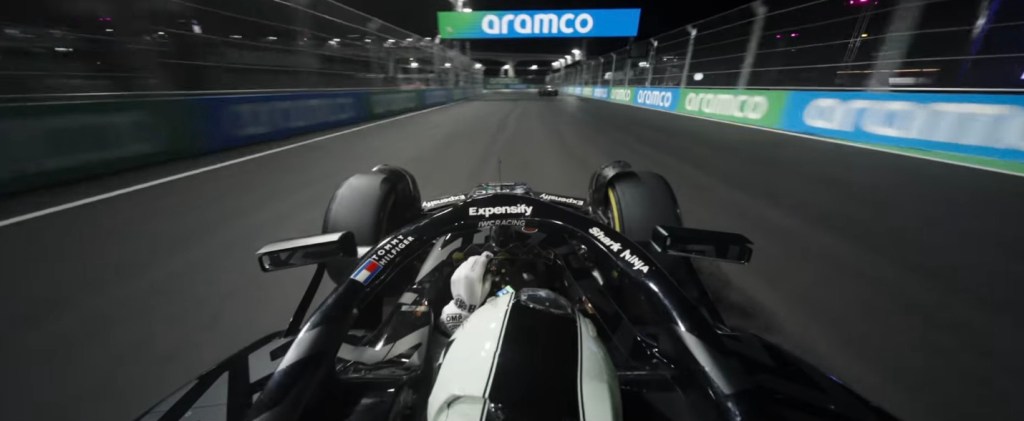
F1 is not here to subvert genre expectations. It is here to remind you why these stories endure. Because in the end, it is not just about winning. It is about finding out who you are when everything else is stripped away. With stunning production design, thrilling race sequences, and two leads at the top of their craft, F1 stands as one of the best films of the year alongside Sinners. Hollywood, take note: sometimes all we want is a great story told with heart, craft, and roaring engines.
5 / 5 ✨ from the Screen Scribe.
(Images are owned by and courtesy of Youtube)



Leave a Reply